
When people think about an HVAC system, they often focus on the air conditioner/ ac 1/2 pk, furnace, or heat pump. However, another important component works behind the scenes to move, condition, and distribute air throughout a building: the air handler. Although it may not receive as much attention as the outdoor condenser or heating equipment, an air handler plays a central role in maintaining indoor comfort and air quality.
How Can CCTV Companies in the UAE Help Businesses Improve SE
Understanding what an air handler does can help homeowners, property managers, and facility operators make better decisions about HVAC installation, maintenance, and repairs.
What Is an Air Handler?
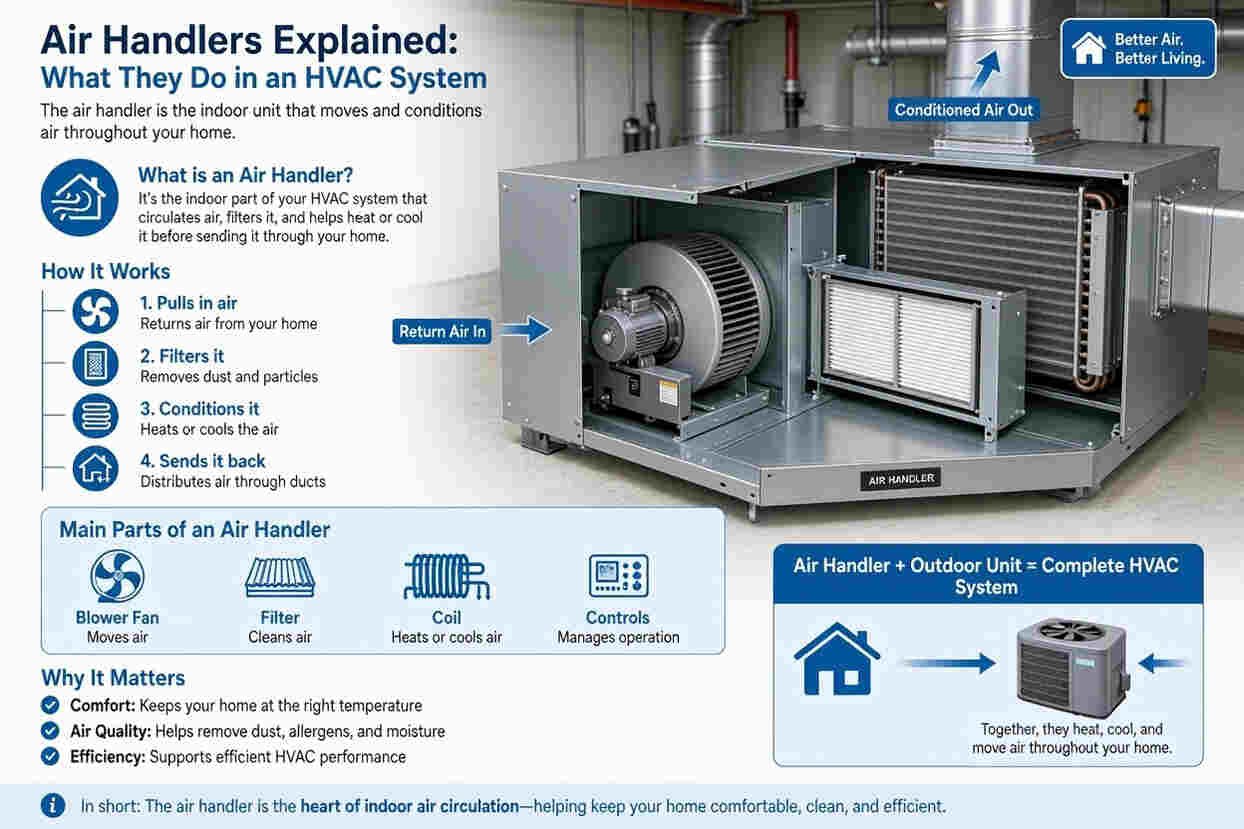
An air handler is an indoor HVAC unit designed to circulate and condition air. It is typically installed inside a building and connected to a network of supply and return ducts. Depending on the HVAC system, an air handler can work with an air conditioner, heat pump, or other heating and cooling equipment.
The primary job of the air handler is to move air across the appropriate components and distribute conditioned air to different rooms. In a typical setup, return air from the building enters the air handler, passes through a filter, moves across a heating or cooling coil, and is then pushed through the supply ductwork.
Air handlers are commonly found in residential, commercial, and institutional buildings. Their size and configuration vary depending on the heating and cooling requirements of the space.
How Does an Air Handler Work?
The operating process begins when indoor air is pulled back into the HVAC system through return ducts. A blower fan inside the air handler creates the airflow needed to move this air.
Before the air reaches the conditioning coil, it generally passes through an air filter. The filter captures airborne particles such as dust, lint, and other contaminants. After filtration, the air passes over a coil or heat exchanger.
During cooling operation, a refrigerant coil absorbs heat from the indoor air. The cooled air is then pushed through the supply ducts and delivered throughout the building. During heating operation, depending on the system design, the air may pass over a heating coil or heat exchanger before being distributed.
This continuous circulation allows the HVAC system to maintain a more consistent indoor temperature.
Key Components Inside an Air Handler
Although designs differ between manufacturers and applications, most air handlers contain several important components.
Blower motor and fan: The blower creates the airflow necessary to move conditioned air through the duct system. Modern systems may use variable-speed motors that adjust airflow according to demand.
Air filter: Filters help remove airborne particles before air is circulated through the building. Proper filter selection and replacement are important for maintaining airflow and indoor air quality.
Cooling or heating coil: The coil transfers heat between the air and the HVAC system. In cooling applications, the coil removes heat from indoor air. In heat pump systems, the coil can provide heating as well.
Drain pan and condensate drain: Cooling coils can produce condensation when warm indoor air comes into contact with a cold surface. The drain pan collects this moisture, while the condensate drain carries it away.
Control components: Sensors, relays, circuit boards, and other controls coordinate blower operation and communicate with the thermostat or broader HVAC control system.
Together, these components allow the air handler to perform its role efficiently.
Air Handler vs. Furnace: What Is the Difference?
Air handlers and furnaces can appear similar because both are indoor HVAC components that move air. However, their functions and system configurations are different.
A furnace typically generates heat using a fuel-burning process or an electric heating element. It then uses a blower to distribute the heated air.
An air handler, by comparison, generally does not generate heat through combustion. It is primarily an air-moving and conditioning unit and is commonly paired with a heat pump or central air-conditioning system. Some air handlers include electric heating elements for supplemental or backup heat.
The distinction is particularly important when designing or replacing an HVAC system because the air handler must be compatible with the equipment connected to it.
Why Air Handlers Matter for Indoor Comfort
An efficient air handler contributes directly to temperature control and airflow. Even if an air conditioner or heat pump has excellent performance specifications, poor airflow can prevent the system from delivering its full potential.
A properly sized and maintained air handler can help distribute conditioned air more evenly. It can also support better humidity control when the cooling system is properly designed.
Air handlers can additionally contribute to indoor air quality through filtration and, depending on the system, optional components such as enhanced filtration or air-cleaning technologies.
Common Air Handler Problems
Like any mechanical HVAC component, an air handler can develop problems over time. One common issue is restricted airflow caused by a dirty filter, blocked return, or obstructed ductwork. A dirty blower wheel can also reduce airflow and place additional strain on the motor.
Other potential problems include unusual blower noises, frozen coils, water around the indoor unit, electrical failures, and malfunctioning controls.
Condensate drainage problems are particularly important during cooling season. A clogged drain can cause water to accumulate around the unit and potentially damage surrounding materials.
Regular inspection and maintenance can help identify these issues before they become expensive repairs.
How to Maintain an Air Handler
Basic maintenance begins with checking and replacing the air filter according to the manufacturer’s recommendations and the building’s operating conditions. Homes with pets, construction activity, or higher particle levels may require more frequent filter changes.
Technicians should periodically inspect the blower assembly, electrical connections, coils, condensate system, and other components. Keeping the coil and blower clean can help preserve airflow and system efficiency.
It is also important to ensure that supply and return vents remain unobstructed. Restricted airflow can affect comfort and increase the workload placed on HVAC equipment.
The Importance of Proper Sizing
An air handler should be properly matched to the heating and cooling equipment and the requirements of the building. Oversized or undersized equipment can create performance problems.
Proper sizing considers factors such as building dimensions, insulation, climate, ductwork, occupancy, and expected heating and cooling loads. Professional HVAC design helps ensure that the air handler and connected equipment operate as an integrated system rather than as isolated components.
In addition, newer air handlers may include advanced controls, variable-speed technology, and improved filtration options that enhance overall system performance. These features can help reduce energy consumption, improve airflow consistency, and provide greater control over indoor conditions. For larger buildings, properly configured air handlers can also support zoning strategies, allowing different areas to receive airflow according to their specific comfort and operational requirements throughout changing occupancy and weather conditions.
Final Thoughts
An air handler is much more than a box containing a blower. It is a critical part of many HVAC systems, responsible for moving air, supporting heating and cooling, filtering particles, and helping distribute comfortable air throughout a building.
Digital Evidence in 2026: Preserving Photos, Records, and Le
Understanding how an air handler works makes it easier to recognize the importance of airflow, filtration, maintenance, and proper equipment matching. Whether used in a home, office, commercial facility, or institutional building, a well-designed and properly maintained air handler can contribute significantly to reliable HVAC performance and year-round indoor comfort.
About acjakarta.com
acjakarta.com is a trusted platform providing practical air conditioning solutions for homes, offices, businesses, and commercial properties in Jakarta. We focus on helping customers find reliable AC products and professional services suited to different cooling requirements and budgets. From AC sales and installation to maintenance, cleaning, and repair, our goal is to make air conditioning easier to manage. We understand the importance of a comfortable indoor environment, especially in Jakarta’s warm and humid climate. With a commitment to quality, responsive service, and customer satisfaction, acjakarta.com strives to become a dependable partner for efficient, comfortable, and long-lasting air conditioning solutions.