
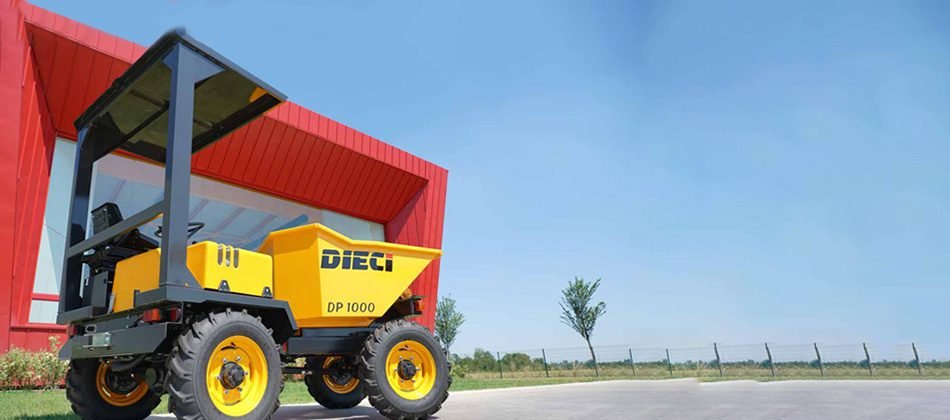
From roadwork and mining to backyard landscaping, dumpers are the unsung workhorses of the construction world — built to haul, tip, and repeat without complaint.
Introduction: Why Dumpers Matter on Every Site
Walk onto any serious construction project and within minutes you’ll spot one — a dumper working its route, loaded heavy, tipping clean, and heading back for another pass. These machines might not get the glamour of cranes or the press coverage of excavators, but they are absolutely central to how modern construction gets done. Without efficient bulk material movement, every other phase of a project grinds to a halt.
Whether you’re looking at a compact mini dumper weaving through a residential garden build or a full-scale articulated dumper machine hauling overburden out of a quarry face, the core job is the same: pick it up, move it, tip it. The variations in size, configuration, and capacity are what make dumpers so adaptable across industries — and why understanding their different use cases is essential knowledge for anyone managing a construction project, sourcing equipment, or evaluating dumper truck price options for a fleet.
In this guide, we cover the major applications of dumpers in modern construction, explore how specialist machines like Dieci dumpers are changing what’s possible on-site, and answer the real questions that contractors and site managers are asking.
1. Road Construction and Infrastructure Work
Road construction is perhaps the single largest application for dumpers globally. Building a road — whether a country lane or a motorway — involves massive quantities of material: excavated topsoil, sub-base aggregate, crushed stone, asphalt, and drainage fill. All of it needs to move from one point to another, often on tight schedules and across partially built surfaces that aren’t yet smooth or paved.
Rigid-frame dumpers with high load ratings are the workhorses of road infrastructure. They pair directly with excavators and loaders, cycling continuously to shift material away from cut zones and deliver fill to embankment areas. On large infrastructure schemes, the logistics of the dumper fleet — how many machines, what cycle times, what payload — often determines overall project speed more than any other single factor.
On smaller urban road repairs and utility reinstatements, a mini dumper becomes invaluable. These compact machines can operate in pedestrianised zones, navigate between temporary traffic management barriers, and tip spoil into skips or wagons where a full-size dumper truck simply cannot reach. Contractors working in city environments often keep a mini dumper as standard kit precisely because of this access advantage.
“For tight urban road schemes, a mini dumper with a rotating skip is often more productive than two full-size machines — you spend less time repositioning and more time actually moving material.”
2. Mining, Quarrying, and Aggregate Production
The mining and quarrying sector is where dumpers reach their full scale. Articulated hauliers designed specifically for off-road terrain — operating on loose rock, steep gradients, and deeply rutted haul roads — carry payloads that would be impossible for a conventional road vehicle. The sheer volume of material that needs shifting in a working quarry demands machines built for continuous, brutal duty cycles.
Here, durability and payload efficiency are everything. Operators track fuel cost per tonne moved, tyre wear on haul road gradients, and hydraulic system reliability under constant tipping loads. Machines from established manufacturers — including purpose-built Dieci dumpers and similar articulated hauliers — are chosen not just for initial price but for total cost of ownership over a machine life that might stretch to tens of thousands of operating hours.
In smaller aggregate quarries and sand and gravel operations, site dumpers with rotating skips or swivel-tip mechanisms allow operators to tip to either side without repositioning — a significant productivity advantage when stockpiling alongside a processing plant or loading directly into hoppers.
3. Building Site Applications
From foundation dig to final landscaping, a building site goes through multiple phases where a dumper machine is the most efficient tool available. During groundworks, dumpers carry excavated material from pile caps and strip footings to on-site spoil heaps or loading areas. As the structure rises, they handle drainage aggregate, concrete washout, and hardcore fill for floor slabs. Towards completion, they shift topsoil, paving materials, and garden substrate.
- Groundworks & Foundations – Moving excavated soil, hardcore fill, and drainage aggregate through tight site conditions.
- Concrete & Slab Work – Distributing concrete, sub-base, and screed across building plots without tracked access.
- Spoil Removal – Continuous haulage of cut material to loading areas or on-site stockpile zones.
- Utility Trenching – Working alongside mini excavators to clear and backfill drainage and service trenches.
On sites where space is genuinely tight — a terraced house extension, a basement conversion, or an infill development — a front-tip or rotating mini dumper often replaces the need for a larger machine entirely. Some mini dumpers can pass through a standard garden gate with a load capacity sufficient for a full day’s productive trenching work alongside a 1.5-tonne excavator.
4. Landscaping and Grounds Maintenance
The landscaping sector has become one of the fastest-growing markets for compact dumper equipment. Large commercial landscaping contracts — golf course construction, sports pitch development, estate groundwork, and urban parks — involve bulk movement of topsoil, sand, gravel, compost, and turf that previously required either larger equipment (causing ground damage) or expensive, slow manual labour.
A dumper machine sized and configured for landscaping work sits between a wheelbarrow and a full-size site dumper. Tracked mini dumpers in this category apply very low ground pressure, making them suitable for working on established lawns, soft ground, or areas where surface protection matters. Rubber tracks leave minimal marks and allow operation in wet conditions where a wheeled machine would churn the ground.
Specialist manufacturers, including Dieci dumpers, have developed telehandler-dumper hybrids that combine bulk material carrying with lift capability — placing material at height or in locations beyond the reach of a standard dumper tip. For landscaping contractors who previously needed to hire two machine types, this flexibility in a single unit has clear cost and logistics advantages.
5. Demolition and Site Clearance
Demolition generates extraordinary volumes of mixed material — broken concrete, brickwork, timber, steel, and general debris — all of which need rapid removal. Speed is usually critical because demolition phases are often on tight programmes before construction can begin. Dumpers working directly in the demolition zone alongside long-reach excavators and sorting attachments are the standard method for getting material to a sorting and crushing area efficiently.
Robust body construction matters enormously in this application. Dumpers in demolition environments take significant abuse from loading with large, sharp material, and machines need regular inspection of skip body condition, hydraulic pipework, and cab protection structures. Many operators in this sector factor body replacement and reinforcement costs explicitly into their assessment of dumper truck price and total operating cost — a cheaper machine that needs frequent body repairs can quickly become more expensive than a better-built alternative.
6. Agricultural and Rural Construction
Beyond urban construction, dumpers serve extensively in agricultural building and rural infrastructure — the construction of farm buildings, silage pits, slurry stores, drainage schemes, and track maintenance across large estates. In these environments, the ability to work across soft ground, in the absence of a prepared site surface, and often far from any maintenance infrastructure, shapes machine selection heavily.
Robust, simple powertrains that local agricultural mechanics can maintain are valued over sophisticated systems that need specialist dealer support. Payload-to-weight ratios matter when operating in soft field conditions. Ground clearance determines whether a machine can actually get to where the work is without getting stuck.

Choosing the Right Dumper: Key Considerations
Selecting the right dumper for a project comes down to three practical questions: What payload do you need? What site conditions will you face? And what does the total cost of ownership look like, not just the headline dump truck price?
Payload requirements drive the fundamental size choice. A mini dumper might carry 500kg to 1.5 tonnes — right for garden work or tight urban sites. Mid-range site dumpers at 3–10 tonnes suit most building and civil engineering applications. Articulated hauliers for quarrying and major infrastructure start at 10 tonnes and scale well beyond 30 tonnes payload.
Site conditions then shape configuration choices. Hard, flat sites suit wheeled machines for their speed and tyre economy. Soft, uneven, or steep terrain favours tracked undercarriages or articulated-steering designs built for off-road stability. Access constraints — gate widths, overhead obstructions, surface sensitivity — may rule out options that are otherwise ideal on payload grounds.
Total cost of ownership always tells a different story than the purchase price alone. Fuel consumption, maintenance intervals, parts availability, tyre life, and residual value all factor in. Established brands, including Dieci dumpers, often carry premium purchase prices that are justified by lower lifecycle costs, better parts networks, and stronger resale, particularly relevant for contractors who plan to sell or trade machines after project completion.
FAQs: Real Questions From Real Contractors
What’s a realistic dumper truck price for a decent second-hand site dumper?
Prices vary significantly by age, hours, and manufacturer, but as a general guide, a used 3-tonne site dumper in reasonable working condition typically runs between £8,000 and £18,000, depending on age and service history. Branded machines from reputable manufacturers tend to hold value better and often come with more verifiable service records. For something newer with low hours — under 500 hours — expect to pay £20,000–£35,000 for a quality 3–6 tonne machine. Always budget separately for delivery, any necessary repairs, and insurance. The cheapest purchase price rarely reflects the cheapest total cost once you factor in reliability.
What is the difference between a dumper machine and a dump truck?
A dumper machine (or site dumper) is a compact, purpose-built off-road machine designed to operate within construction sites — typically with a forward-tipping or rotating skip, four-wheel drive, and a capacity ranging from under a tonne to around 10 tonnes. They’re not road-legal and are designed for site conditions, not highway haulage. A dump truck (or dumper truck) is a larger, road-going vehicle designed to transport bulk material over longer distances on public roads before tipping. Dump trucks typically carry 10–30 tonnes or more and require an HGV licence to operate. The choice between them depends on whether your haulage is on-site or on-road.
Is a mini dumper actually worth it for small landscaping jobs, or should I just use a wheelbarrow?
For genuinely small one-off jobs — moving a few tonnes of topsoil over a weekend — a wheelbarrow or borrowed help might be fine. But for any landscaping contractor doing this regularly, a mini dumper pays for itself surprisingly quickly. A tracked mini dumper can move 4–6 times more material per hour than a person with a barrow, works without fatigue, fits through most garden gates, and dramatically reduces physical strain on your crew. Hire costs for a mini dumper are typically £80–£150 per day, and even at those rates, the productivity gain usually covers the cost on a half-day job. If you’re doing more than 3–4 landscaping jobs per month, ownership starts to make financial sense.
What makes Dieci dumpers stand out compared to other brands?
Dieci is an Italian manufacturer known primarily for its telehandler range, and its dumper and multifunctional carrier products carry the same engineering reputation — robust build quality, well-thought-out hydraulic systems, and good operator ergonomics. Where Dieci dumpers tend to differentiate is in their hybrid utility: several models combine bulk carrying capability with lift and placement functions that a conventional site dumper simply can’t offer. This means one machine can do the work of two on certain jobs. The trade-off is typically a higher purchase price and greater mechanical complexity compared to simpler dedicated site dumpers. For contractors who value versatility and are operating at a scale where machine utilisation justifies the cost, Dieci is consistently well-regarded by operators who’ve run them.
Conclusion
Dumpers are among the most versatile machines in the construction industry — a fact that becomes obvious when you look at just how many different applications they serve. From the largest open-cast mining operations to a compact tracked mini dumper inching through a garden gate, the core value proposition is identical: get material from where it is to where it needs to be, quickly and reliably.
Whether you’re evaluating dumper truck price options for a fleet upgrade, considering a specialist dumper machine for a specific site condition, or exploring what Dieci dumpers can offer in terms of multi-function capability, the same principles apply: match the machine to the application, look beyond the purchase price to total ownership cost, and choose equipment from manufacturers whose dealer and parts networks can support you when it matters.
The right dumpers on the right project don’t just move material — they determine the pace of everything else.
Thanks, investloomm.com contact them here.

Mark John is an experienced article publisher with a strong background in digital media, SEO writing, and content strategy. Skilled in creating engaging, well-researched, and reader-focused articles that drive traffic and build authority. Passionate about delivering high-quality content across diverse niches, maintaining editorial standards, and optimizing every piece for maximum reach and impact.