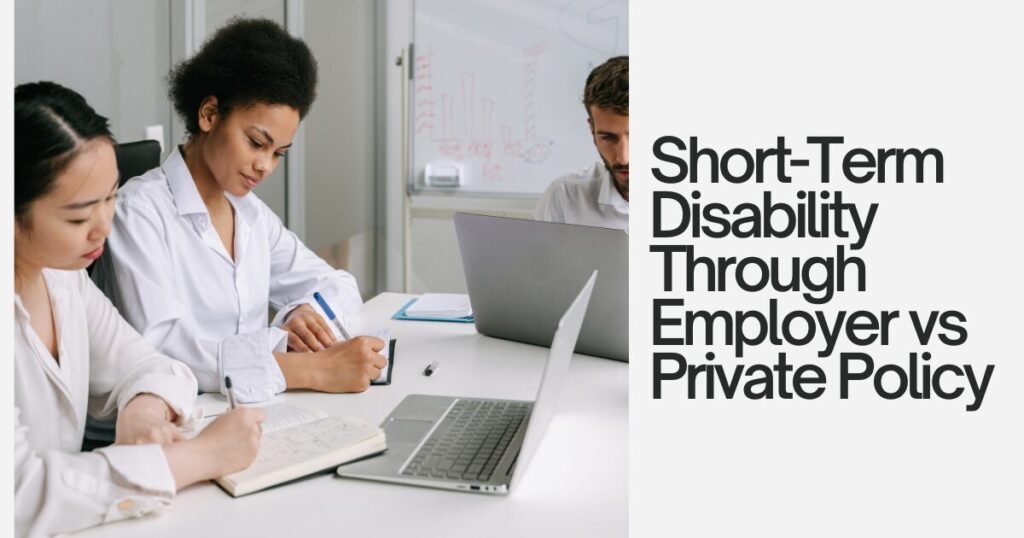
Short-term disability insurance replaces part of your income when illness or injury keeps you from working temporarily. You can get this coverage through your employer’s benefits package or buy a private policy independently. Each option offers different levels of protection, cost structures, and flexibility—and the right choice depends on your financial situation and career goals.
Around one in four workers will experience a disability before retirement, making this decision more important than you might think. Let’s break down how employer-sponsored and private short-term disability policies compare so you can make an informed choice about protecting your income.
What Is Short-Term Disability Insurance?
Short-term disability insurance pays you a percentage of your income when you can’t work due to medical conditions. Most policies cover 13 to 26 weeks and replace 40% to 70% of your salary during that time.
Common qualifying conditions include pregnancy complications, surgery recovery, broken bones, mental health issues, and chronic pain. You don’t need to get injured at work to qualify—these policies cover illnesses and accidents that happen anywhere.
The insurance kicks in after a waiting period (called an elimination period), which typically ranges from 7 to 30 days. After that, you’ll receive monthly payments until you recover or your benefit period ends.
Employer-Sponsored Short-Term Disability Coverage
Your workplace might offer short-term disability as part of your benefits package. Some states—California, Hawaii, New Jersey, New York, and Rhode Island—actually require employers to provide this coverage.
How Employer Coverage Works
When you sign up for employer-sponsored disability during open enrollment, you’re joining a group policy. Many companies pay part or all of the premium, making it a low-cost option. You typically don’t need a medical exam to qualify, which means you can get covered even with pre-existing conditions.
The benefit usually covers 50% to 60% of your base salary, though some employers offer higher percentages. Your company will coordinate with the insurance carrier, and if you become disabled, you’ll submit your claim through their system.
Advantages of Employer Plans
You’ll pay less upfront because your employer subsidizes the premium or covers it completely. The enrollment process is simple—just check a box during benefits enrollment. You’re automatically accepted without health screenings or medical underwriting.
Group rates make this coverage affordable. Your employer handles the administrative work, so you don’t need to shop for policies or deal with insurance agents directly.
Drawbacks of Employer Coverage
The coverage ends when you leave your job. Your policy isn’t portable, so you can’t take it with you to a new employer. This leaves gaps in protection during career transitions.
Benefits might be taxable if your employer pays the premiums. You could lose 20% to 30% of your benefit to taxes, reducing your actual take-home pay significantly. What looks like 60% income replacement might become just 42% after taxes.
Your employer controls the policy terms. They can change coverage levels, switch insurance carriers, or even cancel the benefit entirely. You have limited say in the benefit amount, elimination period, or other policy features.
Most employer plans cap benefits at a lower dollar amount, which might not cover your full expenses if you earn a higher salary.
People also love to read this: Term Life Insurance vs Whole Life Insurance Calculator
| Feature | Employer-Sponsored | Private Policy |
|---|---|---|
| Coverage Amount | 50-60% of base salary | Up to 80% of income |
| Cost | Low or free | Higher premiums |
| Portability | Not portable | Stays with you |
| Tax Treatment | Often taxable | Tax-free benefits |
| Customization | Limited options | Fully customizable |
| Medical Underwriting | Usually not required | Required for approval |
Private Short-Term Disability Insurance
Private policies give you direct control over your coverage. You buy the policy independently from an insurance company, and you own it outright.
How Private Policies Work
You work with an insurance agent or apply online to get quotes. The insurer evaluates your health, occupation, and income to determine your premium and coverage amount. You’ll typically need a medical exam and answer questions about your health history.
Once approved, you pay monthly or annual premiums. The policy stays active as long as you keep paying, regardless of employment changes. You choose your benefit amount, elimination period, and how long benefits will last.
People also love to read this:Best Life Insurance for Diabetics and High-Risk Conditions
Benefits of Private Coverage
You own the policy, so it moves with you between jobs. Benefits are tax-free because you pay premiums with after-tax dollars. This means 60% coverage actually gives you 60% of your income.
You customize every aspect—benefit amount, waiting period, benefit duration, and optional riders. Want a 14-day elimination period instead of 30 days? You can choose that. Need $5,000 monthly benefits instead of $3,000? You can buy higher coverage.
The policy includes guaranteed renewal provisions, protecting you from cancellation as long as you pay premiums. Your coverage can’t be reduced or eliminated because of health changes or age.
Some private policies offer riders like cost-of-living adjustments or future increase options, giving you more comprehensive protection.
Disadvantages of Private Policies
You’ll pay higher premiums because you’re covering the full cost yourself. Policies typically cost 1% to 3% of your annual income, which adds up quickly.
Getting approved requires medical underwriting. If you have health issues or work in a high-risk occupation, you might face higher premiums or coverage denials. Pre-existing conditions often aren’t covered for the first 6 to 12 months.
You handle all the paperwork yourself—from researching policies to managing claims. This takes more time and effort than employer-sponsored coverage.
Coverage Amount and Benefit Limits
Employer plans typically replace 50% to 60% of your base salary, with monthly caps around $5,000 to $10,000. Your bonus, commission, and overtime usually aren’t included in the calculation.
Private policies can cover up to 70% or 80% of your total income, including bonuses and other compensation. Monthly benefits can reach $20,000 or more, depending on your income level and the insurer’s guidelines.
Higher coverage comes with higher premiums. You’ll need to balance how much protection you need against what you can afford to pay monthly.
Elimination Periods and Benefit Duration
The elimination period is your waiting time before benefits start. Employer plans commonly have 7 to 14-day waiting periods. Private policies let you choose anywhere from 0 to 90 days—shorter periods cost more but give you faster access to benefits.
Benefit duration varies too. Employer coverage usually lasts 13 to 26 weeks. Private policies offer similar timeframes, but you can sometimes extend coverage up to one year.
If you have both short-term and long-term disability insurance, your short-term benefits should cover the waiting period before your long-term policy kicks in. This creates a seamless income replacement strategy.
Tax Implications You Need to Know
Here’s where things get interesting. If your employer pays your short-term disability premiums, any benefits you receive are taxable as ordinary income. That 60% benefit becomes 42% after a 30% tax hit.
When you pay premiums yourself—either through payroll deductions with after-tax dollars or via a private policy—your benefits arrive tax-free. This makes a massive difference in your actual take-home money during disability.
Some employers let you pay your portion of group premiums with after-tax dollars, which makes those benefits tax-free. Check with your HR department to understand your specific situation.
Portability and Job Changes
Employer coverage evaporates when you leave your company. Whether you quit, get laid off, or retire early, your coverage ends. You can’t convert it to an individual policy or take it with you.
Private policies stay with you forever (as long as you pay). You maintain continuous coverage through job changes, career pivots, or if you decide to start your own business. This portability is valuable for people who change jobs frequently or work in volatile industries.
Cost Comparison: What You’ll Actually Pay
Employer plans cost very little because your company subsidizes them. You might pay $10 to $50 per month through payroll deductions, or nothing if your employer covers the full premium.
Private short-term disability runs $50 to $300 monthly, depending on your age, health, occupation, income level, and chosen coverage amount. High-risk jobs like construction or law enforcement pay more than office workers.
Self-employed individuals can get private policies but should expect to pay on the higher end of that range. Some insurers offer discounts up to 15% for self-employed professionals.
When to Choose Employer Coverage
Employer-sponsored coverage makes sense if your company offers it at low or no cost. Take advantage of this benefit, especially if you’re young, healthy, and working in a stable industry.
It’s particularly valuable when you’re just starting your career and building emergency savings. The affordable premiums and automatic acceptance make it accessible to everyone.
If your income is moderate and your employer’s benefit amount covers most of your expenses, you might not need additional coverage. Just make sure you understand the tax implications and benefit limits.
When Private Coverage Makes More Sense
Buy a private policy if you’re self-employed or your employer doesn’t offer short-term disability. You need income protection regardless of employment status.
High earners should consider private coverage because employer plans often cap benefits too low. If you make $150,000 annually, a $5,000 monthly maximum won’t come close to replacing 60% of your income.
Career changers and consultants benefit from portability. If you switch jobs frequently or work as an independent contractor, private coverage ensures continuous protection.
People with specialized skills or high-income professions should look for policies with “own occupation” definitions of disability. These policies pay benefits if you can’t perform your specific job, even if you could work in a different field.
People also love to read this: Best Life Insurance for Diabetics and High-Risk Conditions
Can You Have Both Types of Coverage?
Yes, and this strategy works well for many people. You can layer employer coverage with a private policy to maximize protection.
Your employer plan provides a foundation of affordable coverage. Then you supplement it with a private policy that fills gaps—higher benefit amounts, better disability definitions, or tax-free benefits.
Make sure both policies coordinate properly. Some policies include coordination of benefits clauses that might reduce payments if you receive benefits from multiple sources. Read the fine print carefully.
Making Your Decision: Key Questions to Ask
Start by calculating your monthly expenses. How much money do you need to cover rent or mortgage, utilities, food, insurance, debt payments, and other essentials?
Look at your emergency savings. Can you survive 30 to 90 days without income? This helps determine what elimination period you can afford.
Review your employer’s coverage carefully. What percentage of your salary does it replace? Is it taxable? What’s the maximum benefit amount? How long do benefits last?
Consider your health status and occupation. Can you qualify for private coverage? Would pre-existing conditions affect your approval or cost?
Think about your career plans. Are you likely to stay with your current employer long-term, or do you change jobs frequently?
State-Mandated Disability Programs
Five states run their own temporary disability insurance programs: California, Hawaii, New Jersey, New York, and Rhode Island. These state programs provide baseline coverage for workers.
California’s State Disability Insurance pays up to $1,620 per week for up to 52 weeks. New Jersey’s program provides 85% of your average weekly wage, capped at $1,119 weekly in 2026.
If you live in these states, you already have some protection. However, you might still want supplemental private coverage if state benefits don’t fully replace your income.
Common Mistakes to Avoid
Don’t assume employer coverage is enough without checking the details. Many people discover too late that their benefits are taxable or capped far below their actual income needs.
Don’t wait until you have health problems to buy private coverage. Insurance companies won’t cover pre-existing conditions, and your premiums will be higher or you might be denied entirely.
Don’t forget to coordinate your short-term coverage with long-term disability insurance. Gaps between when short-term benefits end and long-term benefits begin can leave you without income.
Don’t overlook the disability definition in your policy. “Any occupation” definitions are much harder to meet than “own occupation” definitions. Make sure you understand when benefits actually pay out.
Your Income Protection Strategy
The best approach combines employer coverage (when available) with private policies tailored to your specific needs. Start with employer benefits if they’re offered, then assess whether you need additional protection.
Young professionals with good employer coverage and solid emergency funds might not need extra policies. High earners, self-employed individuals, and those in specialized professions should seriously consider private coverage.
Review your coverage annually, especially after major life changes like marriage, having children, buying a home, or getting promoted. Your income protection needs evolve as your life and finances become more complex.
Remember that around 5% of working Americans will become temporarily disabled each year. Short-term disability insurance isn’t about being pessimistic—it’s about being prepared.
People also love to read this: Term Life Insurance vs Whole Life Insurance: Which is Better?
Frequently Asked Questions
Can I buy short-term disability insurance if I’m already pregnant?
Most private policies won’t cover pregnancy if you’re already pregnant when you apply. However, employer-sponsored group plans often cover pregnancy complications regardless of when you enrolled, as long as you signed up during your enrollment period.
How long does it take to start receiving benefits after filing a claim?
Employer plans typically start paying within 7 to 14 days after your elimination period ends. Private policies vary but usually process claims within 2 to 4 weeks. You’ll need medical documentation from your doctor proving you can’t work.
What happens to my health insurance if I’m on short-term disability?
Many employers continue your health insurance while you’re on short-term disability, but this isn’t guaranteed by law. Check your company’s benefits handbook or ask HR directly. You might need to continue paying your portion of premiums through COBRA or direct billing.
Do short-term disability benefits count as income for Social Security purposes?
No, short-term disability benefits don’t count toward your Social Security earnings record. However, employer-paid benefits are considered taxable income by the IRS, which affects your tax return but not your Social Security credits.
Can my employer fire me while I’m collecting short-term disability benefits?
Your job isn’t automatically protected just because you’re receiving short-term disability. However, if you qualify for FMLA (Family Medical Leave Act), you have 12 weeks of job protection. The Americans with Disabilities Act (ADA) might also provide protection depending on your situation. Check with an employment attorney if you’re concerned about job security.