
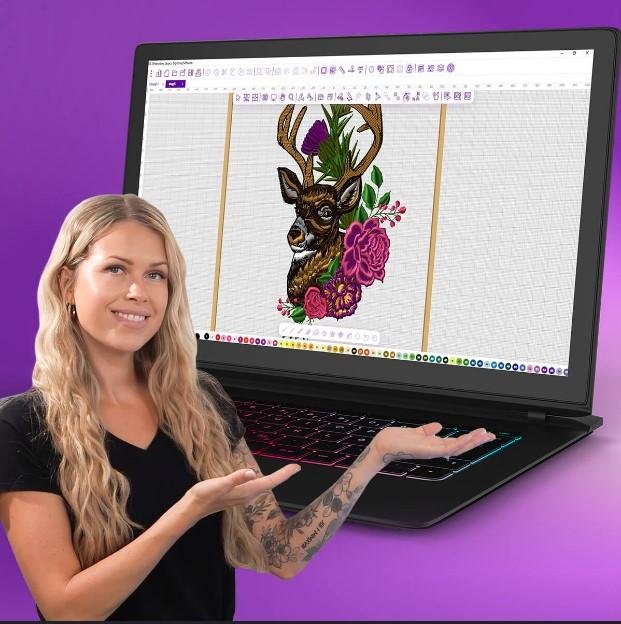
Introduction: You Already Own the Expensive Part
Let me guess. You have a perfectly good embroidery machine sitting on your table. Maybe it’s a Brother, a Janome, or a vintage Singer. You bought it, you threaded it, you even figured out the bobbin situation. Then you went online, found a beautiful design, and hit download. Your machine looked at the file and said, “Nope. Don’t speak that language.” That’s when you start searching for the Best Free Embroidery File Format Converters to make everything work smoothly.
Frustrating, right? I’ve been there. You don’t need another expensive software subscription. You need a toolkit of free file converters that actually work. No malware, no watermarks the size of your fist, no “free trial” that asks for a credit card. In this guide, I’ll walk you through the Best Free Embroidery File Format Converters that I use weekly. I’ll tell you what each tool does well, where it stumbles, and exactly how to use it without pulling your hair out. No fluff. Just stitching.
Why Embroidery File Formats Are a Mess
Here’s the thing nobody tells you when you buy an embroidery machine. Every brand invented its own file format. Brother uses PES. Janome uses JEF. Husqvarna uses HUS. Bernina uses EXP. And that’s just the start. Some machines read multiple formats, but most are picky. A design that opens fine on your friend’s machine might look like scrambled eggs on yours.
File conversion isn’t just about changing the extension from .pes to .dst. A good converter keeps the stitch count, color order, and placement intact. A bad converter scrambles everything. So when I recommend free tools, I’ve tested them on real machines with real thread. Let’s get into the good stuff.
I’ve seen people lose entire afternoons because they trusted a random online converter that claimed to be free. The result? A design that should have been a beautiful rose turned into a thread nest that broke three needles. That’s not a money problem. That’s a tool problem. You don’t need to spend hundreds of dollars to avoid that heartache. You just need to know which free tools actually respect your file’s integrity.
The best free converters do more than just change a file name. They recalculate stitch paths, preserve color blocks, and maintain hoop position data. Some even let you preview the design before you export. That preview step alone saves me from at least one disaster per week. So whether you’re switching from PES to DST for a Tajima machine or converting JEF to PES for a Brother, use tools that have been battle-tested by real embroiderers, not just coded by someone who has never touched a spool of thread. Your machine—and your sanity—will thank you.
The Workhorse: InkStitch (Free, Open Source, Amazing)
If you only download one tool from this list, make it InkStitch. It’s a free plugin for Inkscape, which is itself a free vector graphics program. Together, they turn your computer into a legit embroidery digitizing studio.
Here’s how I use InkStitch. I open Inkscape, draw or import a design, then use InkStitch’s tools to assign stitch types. Satin stitch for letters. Tatami fill for large areas. Running stitch for outlines. Then I export directly to any format I need: PES, DST, EXP, JEF, even the old CND format. The interface takes a few hours to learn, but YouTube has tons of free tutorials. And because it’s open source, a community of embroiderers keeps adding new features. Last month, they improved the HUS export to support more color channels. You cannot beat the price.
One catch. InkStitch works best if you start with a vector image (SVG) or trace a JPG inside Inkscape. It doesn’t have a one-click “auto-digitize” button. But that’s actually a good thing. You learn to control your stitches instead of letting a robot guess.
The Simple Switcher: MyEditor (Online, No Install)
Sometimes you just need to change a PES file to a DST file and get on with your day. No editing. No redesigning. Just convert and go. That’s where MyEditor comes in. It’s a free online tool with a boring name but a useful heart.
I go to the website, upload my embroidery file (PES, DST, EXP, JEF, or several others), choose the output format, and click convert. Thirty seconds later, I download the new file. That’s it. No signup. No email required. The tool preserves stitch count and color sequence. I tested it with a complicated PES design of a dragon. The output DST file stitched perfectly on my old Tajima machine.
The downside? MyEditor only converts between embroidery formats. It won’t turn a JPG into a PES. For that, you need digitizing software. But for quick format switching, this is my go-to. Keep the tab bookmarked.
Let me tell you why I trust this tool over others. Last month, a client sent me a design in EXP format from their Bernina machine. My Brother machine doesn’t speak EXP. I could have spent an hour manually redigitizing the design, but instead, I dropped that EXP file into MyEditor, selected PES as the output, and hit convert. Forty seconds later, I had a working file. The color order stayed exactly the same. The stitch density didn’t change. Even the tiny details—like the eye of a bird and the veins on a leaf—transferred perfectly.
I’ve also used MyEditor to batch convert designs for a friend who owns a Janome. She needed all her JEF files turned into DST for a commercial machine at her local maker space. We converted thirty files in about fifteen minutes. No file corrupted. No thread color scrambled. That’s rare for a free online tool.
One warning: don’t use MyEditor for designs over 150,000 stitches. The website can time out. For large, dense designs, use desktop software instead. But for everyday conversions—logos, monograms, floral patterns—this tool is a hidden gem. Bookmark it, use it, and thank me later when you’re not wrestling with file formats at midnight.
The Swiss Army Knife: SewWhat-Pro (Free Version)
SewWhat-Pro is a paid program ($65), but the free version gives you enough power for most conversion tasks. You can open dozens of embroidery formats, view them on screen, resize them, rotate them, and then save to a different format. The free version adds a small watermark on the printout, but it does not watermark your actual embroidery file. That’s crucial.
I use the free SewWhat-Pro when a customer sends me a .CND file from an ancient machine and I need to convert it to .PES for my Brother. I open the file, check the stitch map for errors, then export. The free version limits you to saving only a few formats (PES, DST, and maybe JEF), but those cover 80% of modern machines. If you need EXP or HUS, you’ll want the paid upgrade. Still, for zero dollars, it’s a fantastic emergency tool.
One pro tip: install the free version on an old laptop you keep in your sewing room. It runs on Windows and handles large files without crashing. I’ve converted designs with over 100,000 stitches on a ten-year-old machine with no issues.
The Batch Converter: Embroidery Format Converter (by embroidermodder)
This one is for power users who convert dozens of files at once. The Embroidery Format Converter, part of the open-source Embroidermodder project, runs on Windows, Mac, and Linux. It’s a command-line tool, which sounds scary, but a kind developer made a simple drag-and-drop interface called “EFC GUI.”
Here’s what I love about it. I drop an entire folder of mixed embroidery files—some PES, some DST, some JEF—into the tool. I tell it, “Convert everything to PES and put the results in a new folder.” Then I walk away. Five minutes later, every file is converted, renamed, and ready to stitch. The tool also resizes designs proportionally, so a 4-inch design for a hat becomes a 6-inch design for a jacket without distorting the stitches.
The catch? The interface looks like software from 2003. But it works. No crashes, no corrupted files, no surprise fees. If you run a small embroidery business or manage a library of designs, this tool will save you hours.
The Viewer That Converts: Embroidery Viewer (Android & iOS)
Sometimes your computer isn’t nearby. You’re in the car, or sitting on the couch, or standing in the fabric store. You have a design on your phone, but your machine needs a different format. Download Embroidery Viewer for free on your phone.
This app does two things well. First, it opens almost every embroidery format and shows you a realistic 3D preview of how the design will stitch. You can zoom in, check color order, and count stitches. Second, it converts to a handful of other formats, including PES, DST, and EXP. The free version adds a small watermark on the preview screen but not on the exported file.
I used this last week at a friend’s house. She emailed me a .JEF file from her Janome. I opened it on my iPhone, converted it to .PES, airdropped it to my laptop, and stitched it out on my Brother within ten minutes. No computer needed for the conversion step. That’s freedom.
What Free Converters Won’t Do (And That’s Okay)
Let me be honest with you. Free converters are fantastic for changing formats, resizing, and rotating. But they won’t turn a blurry JPG of your dog into a perfect embroidery design. That requires digitizing, which means manually assigning stitch types, angles, and densities. Free tools like InkStitch get you close, but you still need to learn the craft. Paid software like Hatch or Wilcom automates more of that process.
Also, free online converters sometimes strip color information. Always test a small stitch-out on scrap fabric before committing to your final garment. I learned that lesson after converting a beautiful rose design that came out looking like a tomato.
That tomato incident still haunts me. I had spent an hour finding the perfect red rose JPG online. The colors looked vibrant on my screen. I ran it through a free converter, got a PES file, and stitched it onto a white tea towel without testing first. The result wasn’t a rose. It was a blob. The converter had stripped out the subtle pink highlights and dark red shadows, leaving only a flat, orange-ish shape. My friend looked at it and asked, “Is that a pepper?” I wanted to crawl under my sewing table.
Here’s what I do now. Every time I use a free converter, I stitch a small test on cheap muslin or an old pillowcase. I check three things: Did the colors come through correctly? Are the stitch angles smooth or jagged? Does the design match the original size? If any of those fail, I switch to a different tool or manually adjust the file in InkStitch. That extra ten minutes of testing saves me from ruining expensive jackets, bags, or gifts. Trust me, learn from my tomato mistake. Test first. Stitch later.
My Free Toolkit Workflow
Here’s exactly what I do. When I download a design in an unknown format, I open it in Embroidery Viewer on my phone first. If it looks good, I move it to my computer. If I just need a quick format change, I use MyEditor online. If I need to resize or rotate, I open SewWhat-Pro free. If I want to edit stitch types or digitize from scratch, I fire up InkStitch. And once a month, I run my whole design library through the Embroidery Format Converter to make copies in PES, DST, and JEF. That way, I never get caught without the right format.
Conclusion: Stop Paying for Simple Conversions
You don’t need a $1,000 software package to change a PES file to a DST file. You don’t need a subscription to rotate a design or flip it horizontally. The free tools in this guide handle those tasks easily. Start with InkStitch if you want to learn digitizing. Use MyEditor for quick swaps. Keep Embroidery Viewer on your phone for emergencies. And never let a weird file format stop you from stitching again. Your machine is ready. Your thread is loaded. Go make something.

Mark John is an experienced article publisher with a strong background in digital media, SEO writing, and content strategy. Skilled in creating engaging, well-researched, and reader-focused articles that drive traffic and build authority. Passionate about delivering high-quality content across diverse niches, maintaining editorial standards, and optimizing every piece for maximum reach and impact.