
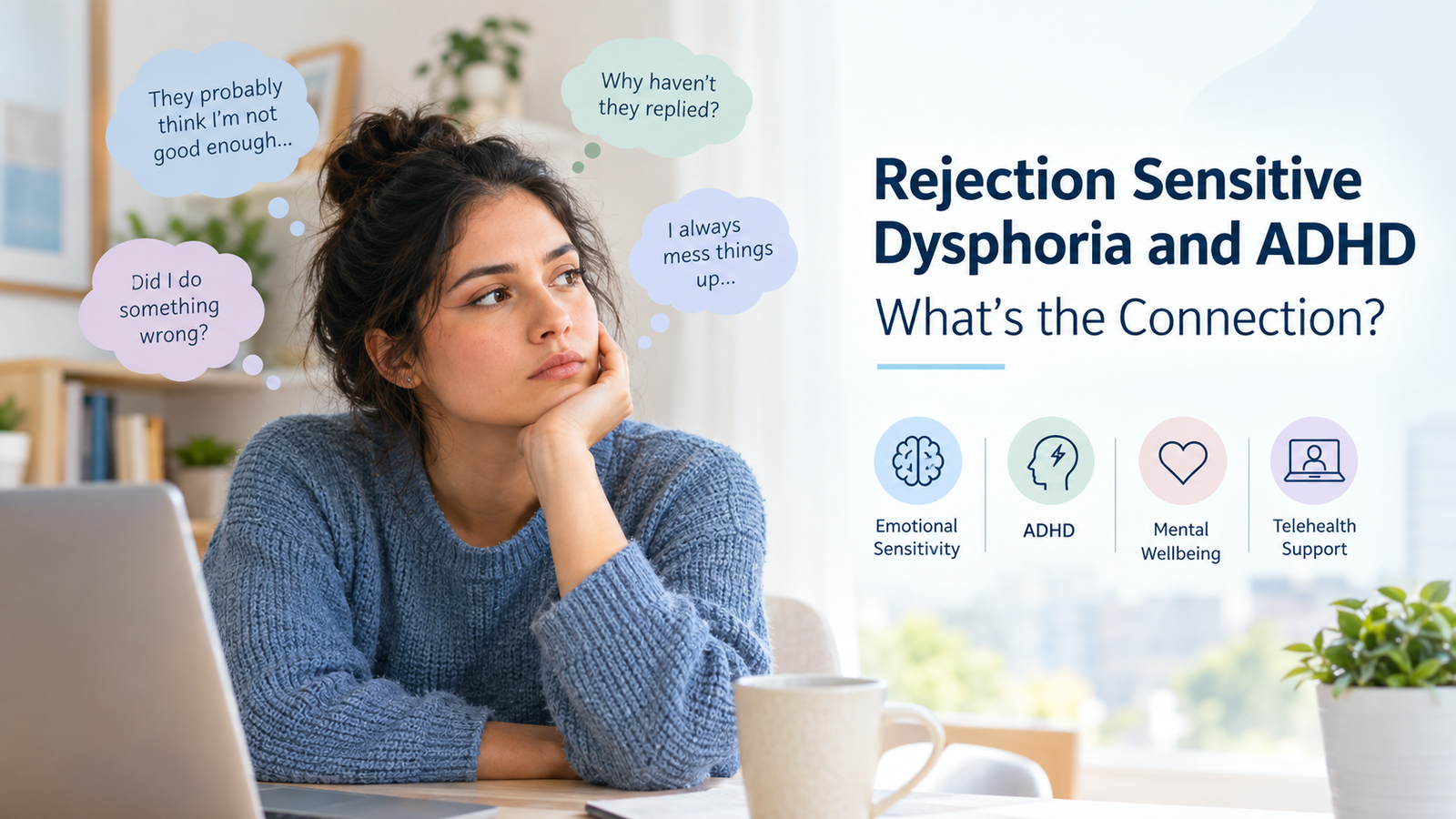
Have you ever received a small piece of criticism and found yourself thinking about it for hours or even days afterwards? Or perhaps a delayed text reply, a change in someone’s tone, or being left out of a conversation can trigger an unexpectedly intense emotional reaction. For some people with ADHD, these experiences may be linked to rejection sensitive dysphoria, a term used to describe a strong emotional response to perceived rejection, criticism, failure, or disappointment.
Rejection sensitive dysphoria, often shortened to RSD, is frequently discussed alongside ADHD because many people with ADHD report heightened sensitivity to rejection and difficulties regulating intense emotions. However, RSD is not a formal medical diagnosis. Instead, it is a term used to describe a particular emotional experience that can occur in people with ADHD and other circumstances.
Understanding the connection between RSD and ADHD can help you recognise emotional patterns, understand potential triggers, and know when professional support may be appropriate.
What Is Rejection Sensitive Dysphoria?
Rejection sensitive dysphoria describes an intense emotional response to perceived or actual rejection, criticism, failure, or disappointment.
The experience can feel much stronger than ordinary disappointment. A person may experience sudden embarrassment, shame, anger, sadness, or anxiety after believing that someone has rejected or criticised them.
For example, imagine your manager gives you feedback about a minor mistake at work. The feedback may be intended to help you improve, but you might immediately think:
- “I’ve let everyone down.”
- “They probably think I’m incapable.”
- “I should never have taken this job.”
- “Everyone must be disappointed in me.”
These thoughts can develop very quickly and may lead to an emotional reaction that feels difficult to control.
It is important to understand that RSD is not an official diagnosis listed in the DSM-5-TR or ICD-11. Therefore, a psychiatrist does not formally diagnose someone with RSD as a standalone disorder. The term is instead used to describe a pattern of emotional sensitivity that some people, particularly people with ADHD, recognise in themselves.
Is Rejection Sensitive Dysphoria a Symptom of ADHD?
RSD is not one of the official diagnostic criteria for ADHD. However, emotional regulation difficulties and heightened sensitivity to rejection are commonly discussed in relation to ADHD.
The Australian ADHD Foundation also describes rejection sensitivity and RSD as experiences that can resonate with many adults with ADHD, while emphasising that RSD is not a formal diagnosis.
ADHD can affect more than attention and concentration. It can also affect executive functioning, impulse control and emotional regulation. This may make it harder for some people to pause, interpret a situation objectively and regulate their emotional response when something feels like rejection.
This does not mean that everyone with ADHD experiences RSD. Similarly, experiencing strong reactions to criticism does not automatically mean someone has ADHD.
A proper assessment is important when emotional difficulties are persistent or interfere with relationships, work, study, or everyday life.
What Is the Connection Between ADHD and RSD?
The connection between ADHD and rejection sensitive dysphoria is still being studied, and there is no single confirmed neurological explanation for RSD.
One important area is emotional regulation.
People with ADHD can experience difficulty regulating emotions, which may mean emotions feel particularly intense or change quickly. A relatively small event can sometimes trigger a much stronger response than expected.
For example:
Situation: Your friend does not respond to your message.
Initial interpretation: “They must be annoyed with me.”
Emotional response: Anxiety, sadness, or anger.
Behaviour: You may send multiple messages, withdraw from the friendship or spend hours replaying the interaction.
The situation itself may be neutral, but the emotional response can become overwhelming.
Another person might experience the same delayed reply and simply assume their friend is busy.
This difference in emotional processing is one reason rejection sensitivity is often discussed alongside ADHD.
Common Signs of Rejection Sensitive Dysphoria
RSD can look different from person to person. It may involve emotional, behavioural, and thought patterns.
Some commonly reported experiences include:
1. Intense reactions to criticism
Even constructive feedback can feel deeply personal. You may understand logically that someone is trying to help but still experience strong emotional distress.
2. Fear of disappointing others
You may become highly concerned about letting down your partner, family, friends, manager, or colleagues.
3. People-pleasing
Some people may go to considerable lengths to avoid conflict or disapproval. They may find it difficult to say no because they fear upsetting someone.
4. Avoiding situations where you could fail
If failure feels emotionally painful, you may avoid applying for a job, starting a project, speaking in a meeting, or trying something unfamiliar.
5. Perfectionism
Perfectionism can sometimes become a way of protecting yourself from criticism. You may feel that making a mistake means you have failed.
6. Emotional shutdown
Not everyone responds to perceived rejection with anger or visible distress. Some people withdraw, become quiet, or emotionally shut down.
7. Replaying conversations
You might repeatedly analyse what you said, how another person responded, and whether you did something wrong.
8. Sudden emotional changes
A perceived rejection may lead to a rapid change in mood. However, these experiences should not automatically be interpreted as bipolar disorder or another mental health condition. A qualified clinician needs to consider the broader pattern and other possible explanations.
What Can Trigger Rejection Sensitive Dysphoria?
Triggers vary from person to person. Some common situations may include:
- Receiving negative feedback
- Making a mistake at work
- Being excluded from a social event
- Not receiving a reply to a message
- A relationship ending
- Feeling ignored
- Being corrected publicly
- Receiving a poor grade
- Not getting a job
- Losing a competition
- Feeling that someone is disappointed in you
- Comparing yourself with other people
Sometimes the trigger is not actual rejection. It may be the perception or fear of rejection.
For example, if a partner appears quieter than usual, someone experiencing rejection sensitivity may immediately assume they are angry or losing interest. The assumption can create significant emotional distress even when the partner has simply had a difficult day.
RSD vs Normal Rejection Sensitivity
Everyone experiences rejection.
Feeling disappointed after missing out on a job, becoming upset after an argument, or feeling embarrassed after making a mistake is part of normal human emotional experience.
The difference with severe rejection sensitivity is often the intensity, speed, and impact of the emotional response.
Someone with ordinary rejection sensitivity may feel upset after criticism but recover relatively quickly.
Someone experiencing intense rejection sensitivity may feel overwhelmed, replay the event repeatedly, withdraw from others, or experience strong shame and self-criticism.
There is no simple test that determines whether someone’s experience is “normal” or RSD. A clinician instead considers the person’s overall symptoms, history, and impact on daily functioning.
Why Can RSD Be Difficult for People With ADHD?
ADHD can affect attention, impulse control, and emotional regulation. When these difficulties occur together, situations involving criticism or rejection can become particularly challenging.
For example, impulsivity may contribute to reacting before thinking. Emotional regulation difficulties may make it harder to calm down once upset. Executive functioning difficulties may then make it harder to shift attention away from the upsetting event.
This can create a cycle:
Perceived rejection → intense emotion → negative thoughts → impulsive reaction or withdrawal → relationship or work difficulties → further distress
Recognising this pattern can be useful because it creates an opportunity to develop healthier strategies for managing the response.
Can RSD Be Diagnosed in Australia?
There is currently no standalone diagnosis for rejection sensitive dysphoria in Australia.
Instead, a mental health professional may explore the experiences contributing to your emotional distress and assess whether ADHD or another condition may be involved.
If ADHD is suspected, an assessment considers symptoms, developmental history, and how difficulties affect different areas of life. Healthdirect notes that ADHD diagnosis involves clinical assessment and that symptoms need to have been present from childhood and cause impairment in multiple settings.
This distinction matters because strong emotional reactions can have many possible causes.
An assessment may consider ADHD alongside conditions such as anxiety, depression or other mental health concerns. This helps ensure that treatment is based on the person’s individual circumstances rather than simply assigning a label to a particular emotional experience.
How Is Rejection Sensitive Dysphoria Managed?
There is no medication specifically approved to treat RSD because it is not a standalone medical diagnosis.
Instead, management generally focuses on the underlying difficulties and any diagnosed conditions.
ADHD treatment
If ADHD is diagnosed, a psychiatrist may discuss appropriate treatment options. Depending on the individual, treatment may include medication, psychological strategies, behavioural approaches or a combination of these.
ADHD treatment needs to be individualised, and medication decisions should be made with an appropriately qualified healthcare professional.
Psychological support
Psychological therapy can help people understand emotional triggers and develop strategies for managing difficult reactions.
Approaches such as cognitive behavioural therapy may help with patterns of negative thinking, while emotional regulation strategies can help create more space between a trigger and a response.
Developing awareness of triggers
Keeping track of situations that trigger strong emotional reactions can help identify patterns.
You might notice that criticism feels more difficult when you are tired, stressed, or already overwhelmed. Recognising these circumstances can make it easier to prepare for challenging situations.
Challenging automatic thoughts
Try separating what you know from what you assume.
For example:
Fact: “My manager asked me to correct a mistake.”
Assumption: “My manager thinks I’m useless.”
The second statement may feel true in the moment, but it is an interpretation rather than confirmed information.
This small distinction can help reduce the intensity of an emotional reaction.
Practical Ways to Manage Rejection Sensitivity
If you frequently experience intense reactions to criticism or perceived rejection, several everyday strategies may help:
- Pause before responding to emotionally difficult messages.
- Give yourself time to calm down before making major decisions.
- Write down what actually happened rather than what you think it means.
- Ask for clarification instead of assuming someone’s intention.
- Practise realistic and compassionate self-talk.
- Avoid making relationship or career decisions during an intense emotional reaction.
- Maintain regular sleep, exercise, and daily routines.
- Discuss recurring emotional difficulties with a qualified professional.
- Keep track of situations that repeatedly trigger strong reactions.
These strategies are not a replacement for professional assessment or treatment, particularly when emotional reactions are significantly affecting your life.
Can Telehealth Help With ADHD-Related Concerns?
Telehealth has made it possible for many Australians to access mental health services without travelling to a physical healthcare setting.
For people seeking an ADHD assessment or psychiatric support, online consultations may provide a convenient option, depending on their circumstances and clinical needs. HelloDoc provides telehealth psychiatric services for Australians, including ADHD assessment and management.
During an online consultation, a qualified clinician can discuss your symptoms, personal history, and concerns and determine what type of assessment or support may be appropriate.
Telehealth does not mean self-diagnosing. A professional assessment remains important when ADHD or another mental health condition is suspected.
When Should You Seek Professional Help?
Consider speaking with a GP, psychiatrist, or psychologist if emotional reactions to rejection or criticism are:
- Affecting your relationships
- Interfering with work or study
- Causing you to avoid important opportunities
- Leading to frequent conflict
- Making you excessively anxious or distressed
- Contributing to persistent low self-esteem
- Difficult to manage on your own
If you already have ADHD, mention your emotional experiences as part of your overall treatment. Emotional regulation and rejection sensitivity can be important parts of understanding how ADHD affects your daily life.
If you experience thoughts of suicide or self-harm, seek urgent help. In Australia, call 000 in an emergency or contact Lifeline on 13 11 14 for crisis support.
Frequently Asked Questions
Is rejection sensitive dysphoria an official diagnosis?
No. RSD is not currently recognised as a standalone diagnosis in the DSM-5-TR or ICD-11. It is a term used to describe intense emotional responses to perceived or actual rejection, criticism, or failure.
Is RSD only associated with ADHD?
No. Although RSD is frequently discussed in relation to ADHD, experiencing rejection sensitivity does not automatically mean someone has ADHD. A clinician should consider the person’s complete history and symptoms.
Can ADHD medication help with RSD?
ADHD medication may help some people manage ADHD symptoms and associated difficulties with emotional regulation, but there is no medication specifically approved for RSD. Treatment decisions should be discussed with a qualified prescriber.
How do I know if I have ADHD or RSD?
RSD cannot be diagnosed as a standalone condition. If you experience persistent ADHD symptoms or intense emotional reactions to perceived rejection, speak with a qualified healthcare professional for an appropriate assessment.
Can adults experience rejection sensitive dysphoria?
Yes. Adults may experience strong emotional reactions to criticism, rejection, relationship difficulties, or workplace feedback. These experiences can affect relationships, employment and self-esteem.
The Bottom Line
Rejection sensitive dysphoria and ADHD are often discussed together because many people with ADHD report intense emotional responses to criticism, rejection, failure or perceived disapproval. However, rejection sensitive dysphoria is not an official medical diagnosis, and experiencing rejection sensitivity does not by itself mean that you have ADHD.
The important step is to look beyond the label and understand what is actually happening. If emotional reactions are affecting your relationships, work, study, or everyday life, a professional assessment can help identify possible contributing factors and appropriate support.
For Australians, telehealth can provide access to qualified mental health professionals from home, including assessment and ongoing support for ADHD where clinically appropriate.
Understanding your emotional patterns is not about blaming yourself. It is about recognising what you are experiencing and finding appropriate, evidence-based support.