
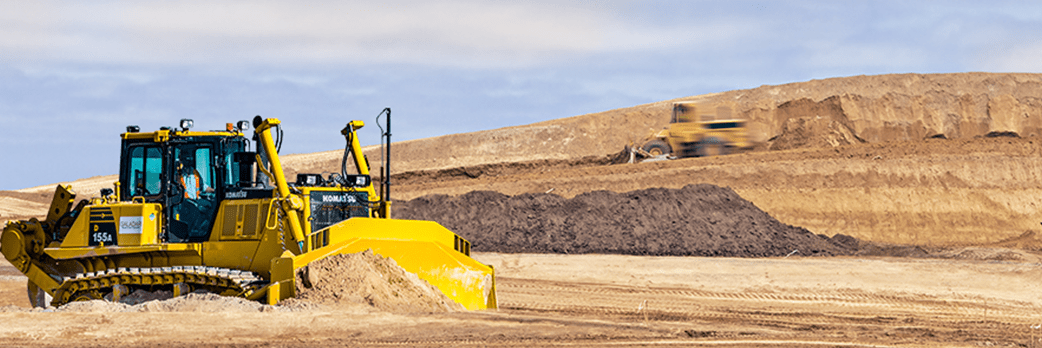
A large dozer can look like the obvious choice when a construction project involves heavy earthmoving. More horsepower, a larger blade, and greater pushing capacity sound useful—until the machine has to work in a confined area, travel between sites, or handle tasks that require precision rather than brute force.
If you are considering a small dozer for sale, the key question is not simply whether the machine is powerful enough. It is whether its size, operating weight, transport requirements, maneuverability, and capabilities actually match the work you need to complete.
A smaller dozer can be more practical for projects where access, grading accuracy, site space, and transportation matter as much as raw production capacity. This article explains the signs that a large dozer may be excessive and the situations in which a smaller machine can make more sense.
When Does a Large Dozer Become Too Much?
Large dozers are designed for demanding applications where moving substantial quantities of material is a priority. They can be highly productive on large earthmoving sites, major infrastructure projects, mining operations, and other applications where the working area and material volumes justify their size.
The problem begins when the project does not require that level of capacity.
A machine that is substantially larger than the task can introduce practical disadvantages:
- More difficult transportation between locations
- Greater space requirements for operation
- Reduced maneuverability in confined areas
- More machine capacity than the job actually needs
- Potentially higher operating and ownership costs
- Greater difficulty performing detailed grading or finishing work
- More complicated access to smaller or restricted sites
The right machine should therefore be selected around the work, not simply around the largest available specification.
Caterpillar, for example, describes small dozers as suitable for applications including clearing and grading lots, road-side sloping, backfilling, and final grading, while positioning larger dozers for more demanding work.
Sign #1: Your Worksite Has Limited Space
One of the clearest signs that a large dozer may be excessive is a restricted work area.
Consider a residential development where the machine needs to work around:
- Existing buildings
- Utility infrastructure
- Fences
- Drainage systems
- Landscaping
- Access roads
- Other construction equipment
A large dozer may have enough power to complete the work, but power is not the only consideration. The machine also needs enough room to turn, position itself, reverse, and approach the material from the correct direction.
A smaller dozer can provide greater flexibility when the working envelope is limited.
This can be particularly important during site preparation and finishing work, where moving a machine only a short distance repeatedly may be more practical than trying to position a large machine in a confined area.
Sign #2: You Need Precision More Than Maximum Pushing Power
Not every dozing task involves moving huge amounts of soil.
Some projects require careful grading, trimming, backfilling, slope preparation, or surface finishing. In these situations, operator visibility, machine maneuverability, blade control, and the ability to make controlled movements can become more important than maximum pushing capacity.
A smaller dozer does not automatically guarantee better grading results. Operator skill, blade configuration, ground conditions, machine technology, and project requirements all matter.
However, a compact machine can be easier to position when the task involves frequent adjustments and relatively small movements.
Komatsu describes its small D37 dozer, for example, as intended for transportable power, precision grading, agility, and construction-site work.
The important lesson is to match machine characteristics with the type of work rather than assuming that the biggest machine will produce the best result.
Sign #3: The Dozer Must Be Transported Frequently
Transportation can become a major consideration when equipment moves between multiple projects.
A large dozer can require more planning because of its physical dimensions and operating weight. Depending on the machine and local transportation requirements, moving it may involve appropriate trailers, route planning, loading procedures, permits, or other logistical considerations.
A smaller dozer can simplify this part of the operation.
For contractors working across multiple smaller sites, the time and effort involved in relocating equipment can affect overall productivity. A machine that is easier to transport may be more useful than a larger machine that spends more time waiting to be moved.
Komatsu specifically highlights transportability as a feature of its small dozer range. Its D37EX-24, for example, has a published operating weight of 9,000 kg and is marketed around easily transportable power.
These figures should not be treated as universal thresholds for equipment selection. Actual transport requirements depend on the machine configuration, attachments, trailer, route, and applicable regulations.
Sign #4: Your Projects Are Mostly Small or Medium-Sized
Equipment needs should reflect the typical project rather than the occasional maximum requirement.
Suppose a contractor usually works on:
- Residential plot preparation
- Small commercial developments
- Landscaping and earthworks
- Utility-related site work
- Road maintenance
- Drainage preparation
- Backfilling
- Smaller grading projects
Buying or operating a very large dozer because one future project might require additional capacity could result in a machine that is oversized for most day-to-day work.
A better approach is to examine the workload over time.
Ask:
- What type of work makes up most of our projects?
- How much material do we normally move?
- How much working space do our sites provide?
- How often do we move the dozer between locations?
- How frequently do we actually need maximum pushing capacity?
- Could larger requirements be handled through temporary rental or additional equipment?
The answers can reveal whether a smaller machine would cover the majority of your workload.
Sign #5: Maneuverability Is Becoming a Problem
A large dozer can be highly effective when there is sufficient room to operate. On a restricted site, however, machine maneuverability can become a limiting factor.
Every extra movement takes time when the operator has to repeatedly reposition the machine to avoid obstacles or access another section of the site.
This can affect productivity even if the machine itself is capable of moving more material per pass.
A smaller dozer may allow an operator to work closer to structures and navigate tighter areas more comfortably, subject to the project’s safety requirements and site conditions.
This is one reason machine selection should consider the complete work cycle rather than focusing only on blade capacity or horsepower.
Sign #6: Your Job Involves Frequent Backfilling and Finishing
Backfilling and finishing tasks often require control rather than maximum force.
For example, a project may involve spreading material around a prepared area, bringing a surface close to grade, shaping a slope, or completing final site preparation.
Using a very large dozer for these tasks can be unnecessary if the additional pushing capacity does not translate into meaningful productivity gains.
A smaller dozer may provide a better balance between pushing ability and controllability.
That does not mean every finishing application calls for a small machine. Large sites can still require large dozers for final work depending on the material volume and grading system being used.
The decision should come from the actual production requirements.
Sign #7: Operating Costs Matter More Than Maximum Capacity
The purchase price is only one part of equipment economics.
Before choosing a dozer, consider the complete cost of ownership and operation, including:
- Fuel consumption
- Routine maintenance
- Wear parts
- Undercarriage maintenance
- Transportation
- Operator requirements
- Insurance
- Storage
- Downtime
- Financing or depreciation
- Attachments and optional equipment
A larger machine may justify these costs when it produces substantially more work. But if most of its capacity remains unused, the additional expense may not provide equivalent value.
This is why equipment buyers should avoid evaluating machines only by purchase price.
The same principle applies to many equipment decisions: the visible price can be only one part of the financial picture. A broader examination of hidden operating costs can help prevent an apparently inexpensive or powerful choice from becoming inefficient over its working life.
Sign #8: Your Sites Have Difficult Access
Site access can determine whether a machine is practical before the machine even begins working.
Check the complete route into the work area.
Consider:
- Gate width
- Road width
- Turning areas
- Bridge or access limitations
- Overhead clearance
- Ground conditions
- Loading and unloading space
- Nearby buildings
- Other equipment operating at the same time
A machine that technically fits into a site may still be difficult to position efficiently.
This is particularly relevant for projects in developed areas where access roads and working spaces were not designed around heavy construction machinery.
Before buying, physically inspect representative job sites where possible. Equipment specifications can tell you dimensions and operating weight, but they cannot fully describe how easily a machine will move through your actual working environment.
Sign #9: You Rarely Need Maximum Blade Capacity
Blade size and capacity matter because they influence how much material a machine can move in a given pass. But bigger is not automatically better.
If the majority of your jobs involve relatively modest material quantities, a large blade may provide capacity that you rarely use.
Instead, consider the relationship between:
Material volume + travel distance + site space + required grade + cycle time.
For a large open site with long production runs, a high-capacity machine may make sense.
For a smaller site with short movements and frequent repositioning, maneuverability can become more important.
This is why the same contractor may reasonably use different dozer sizes for different projects.
Sign #10: Your Operators Spend More Time Positioning Than Pushing
Watch how the machine is actually being used.
If an operator frequently needs to:
- Make short passes
- Reverse repeatedly
- Navigate around obstacles
- Wait for other equipment
- Reposition the blade
- Work around structures
- Move between small work areas
then maximum pushing capacity may not be the main productivity constraint.
In such cases, reducing machine size can sometimes improve the overall workflow.
The goal is not to make the machine smaller at all costs. The goal is to eliminate capacity that is not contributing meaningfully to the work.
Small Dozer vs. Large Dozer: What Should You Compare?
When evaluating a small dozer for sale or comparing different equipment classes, avoid looking at horsepower alone.
A practical comparison should include several factors.
| Factor | Smaller Dozer | Larger Dozer |
| Confined-site maneuverability | Often more suitable | Can be challenging |
| Transport between sites | Generally easier to manage | May require more planning |
| Small grading projects | Often well suited | May provide excess capacity |
| Large-scale earthmoving | May require more passes | Better suited |
| Precision work | Can be advantageous | Depends on machine and operator |
| Material-moving capacity | Lower | Higher |
| Space requirements | Lower | Higher |
| Typical project fit | Smaller construction and grading work | Large earthmoving and demanding applications |
These are general comparisons rather than guarantees. Actual performance depends on the specific model, blade configuration, ground conditions, operator, and job requirements.
What to Check Before Buying a Small Dozer
If your assessment points toward a smaller machine, do not make the purchase based on size alone.
Check the operating weight
Operating weight affects transportation, ground pressure, site access, and logistics.
Make sure the machine’s actual configuration matches your transportation arrangements.
Check blade configuration
Different blade types are suited to different tasks. Consider whether the machine needs to push, spread, grade, or perform a combination of these activities.
Check undercarriage condition
For a used dozer, undercarriage condition can have a major influence on future maintenance requirements.
Inspect tracks, rollers, idlers, sprockets, and related components as appropriate.
Check visibility and operator controls
The operator needs good visibility of the blade and working area.
Ergonomics and control response can also influence productivity during long shifts.
Check service support
Availability of parts, qualified technicians, routine maintenance support, and technical documentation can matter just as much as the machine’s specifications.
Check the actual job requirements
Before purchasing, write down the most common tasks the dozer will perform.
A simple equipment checklist can prevent an expensive mismatch between machine capabilities and project needs. The same principle used in other purchasing decisions—understanding the requirements before comparing options—is useful when evaluating heavy equipment.
When a Large Dozer Is Still the Right Choice
A smaller dozer is not automatically the better option.
A large dozer can be appropriate when the project involves substantial quantities of material, large open working areas, long production cycles, demanding pushing requirements, or other conditions where higher capacity directly contributes to productivity.
For example, major earthmoving operations may benefit from equipment specifically designed for high-production applications. Caterpillar distinguishes its large dozers as machines intended for more demanding work, while its smaller machines are positioned around versatility, transportability, and grading applications.
The mistake is not choosing a large dozer.
The mistake is choosing one without determining whether the project can actually use its capacity.
Safety Should Remain Part of the Decision
Machine size should never be selected solely around convenience or operating cost.
Operators need appropriate training, safe working procedures, suitable visibility, and equipment that is appropriate for the conditions of the site.
Construction safety requirements also vary by jurisdiction. For example, OSHA’s U.S. construction standards specifically cover bulldozers and other earthmoving equipment and include requirements concerning seat belts for covered equipment.
Local regulations and manufacturer requirements should be checked before operating or transporting heavy equipment.
A smaller dozer is not inherently safe simply because it is smaller. Ground conditions, slopes, traffic, visibility, attachments, operator competency, and worksite planning remain important.
A Simple Decision Test
Before choosing between a large and small dozer, answer these questions:
1. How much material must be moved?
Estimate the typical workload rather than the maximum imaginable workload.
2. How much space is available?
Measure access points and working areas where practical.
3. How often will the machine move between sites?
Frequent transportation can make machine size and weight more significant.
4. How important is precision?
Grading, finishing, and controlled backfilling may require different characteristics than bulk earthmoving.
5. How often will maximum capacity actually be used?
If the answer is rarely, a smaller machine deserves serious consideration.
6. What are the total ownership and operating costs?
Look beyond the purchase price.
7. What happens when a project exceeds the machine’s capacity?
Consider whether another machine can be rented or brought in when necessary.
This last question is particularly important. Buying a machine for the largest job you might encounter can leave you with excess capacity for the rest of the year. In some operating models, it may make more sense to own equipment suited to the majority of work and use additional resources for occasional high-demand projects.
Final Takeaway
A large dozer is not automatically a better dozer for every construction project.
If your work involves confined sites, frequent transportation, smaller material volumes, grading and finishing, or repeated maneuvering around obstacles, a smaller machine may provide a more practical balance of capability and flexibility.
The right choice depends on the complete job: material volume, site conditions, access, transport, precision requirements, operating costs, and expected utilization.
When evaluating a small dozer for sale, start with the work you actually perform rather than the machine’s headline specifications. The best equipment match is the one that provides enough capacity to complete the job efficiently without carrying unnecessary size, cost, or logistical complexity.
Source:
- https://investloomm.com/articles/the-hidden-costs-of-egocentric-video-data-collection/
- https://investloomm.com/articles/a-practical-checklist-for-how-to-manage-complex-subscription/
Sources
- https://www.galadarigthe.com/products/earthmoving-machines/dozers/
- https://www.galadarigthe.com/products/earthmoving-machines/dozers/wd600-6/
- https://www.galadarigthe.com/products/earthmoving-machines/dozers/d85px-15r/
- https://www.galadarigthe.com/products/earthmoving-machines/dozers/d85ex-15r/
- https://www.galadarigthe.com/products/earthmoving-machines/dozers/d65wx-16/
- https://www.galadarigthe.com/products/earthmoving-machines/dozers/d65px-16/
- https://www.galadarigthe.com/products/earthmoving-machines/dozers/d65ex-16/
- https://www.galadarigthe.com/products/earthmoving-machines/dozers/d475a-5e0/
- https://www.galadarigthe.com/products/earthmoving-machines/dozers/d375a-6r/
- https://www.galadarigthe.com/products/earthmoving-machines/dozers/d275a-5r/
- https://www.galadarigthe.com/products/earthmoving-machines/dozers/d155a-6/