Whether you run a construction site, a logistics yard or a standby power plant, fuel storage is not an area to cut corners. A tank that leaks, corrodes early or is the wrong size can cause unplanned downtime, environmental damage, safety incidents and costly cleanup. In a region where generators often run for long hours and outdoor temperatures regularly climb past 45°C, the quality of your fuel storage matters even more.
Choosing the right fuel tank manufacturer in UAE affects safety, uptime and long-term running costs. The market has many suppliers, from small workshops to established industrial fabricators, and their products can look similar on paper. The differences usually show up later, in weld quality, coating life, fitting reliability and how well the tank was matched to the job. Here is what to look for before you place an order.
Understand your fuel storage requirements first
Before speaking to any supplier, take time to define what your facility actually needs. Start with the type of fuel you will store, which for most sites in the UAE is diesel for generators, plant and vehicles. Next, look at how much fuel you use on a typical day and during peak periods, and how often you can realistically arrange deliveries. A remote construction site may need several days of reserve, while an urban facility with a reliable supply may manage with less.
Think about where the tank will sit. Is there enough level ground? Will it be indoors, in a plant room, on a roof or out in the open? Does it need to fit under a generator, beside it, or at a distance with supply and return lines? Clear answers to these questions make your conversation with the manufacturer faster and help you compare quotes fairly.
Start with design and capacity
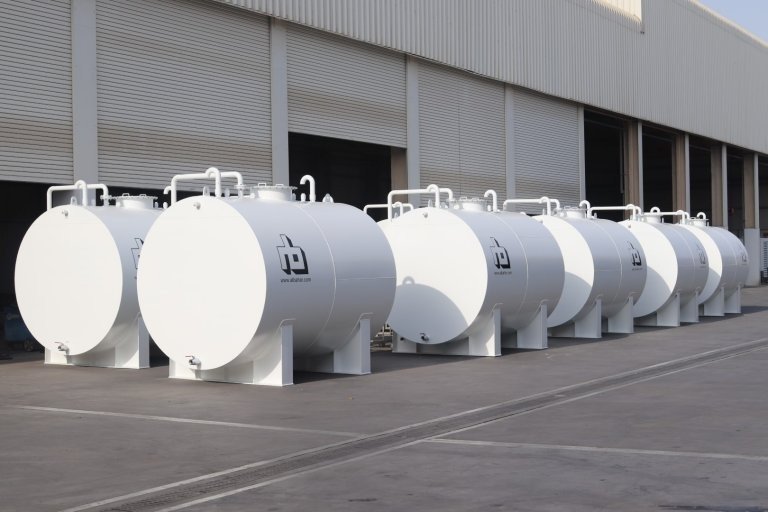
Al-Bahar MCEM designs above ground fuel storage tanks around customer requirements. Shapes include cylindrical, cubic, rectangular, dish-ended and flat-ended, and both single wall and double wall construction are available. Capacities
range from 500 to 50,000 litres. A good manufacturer should help you match capacity to daily fuel usage and available site space instead of pushing a one-size-fits-all product.
Shape is about more than looks. Cylindrical and dish-ended tanks handle internal pressure well and are common for larger bulk storage. Rectangular and cubic tanks make better use of tight spaces such as plant rooms or areas beside
existing equipment, and they are easier to place against walls. Flat-ended designs are a middle ground for horizontal installations. An experienced fabricator will explain the trade-offs for your site rather than offering whatever is in stock.
Single wall or double wall?
The choice between single wall and double wall construction deserves careful thought. A single wall tank is simpler and usually costs less, but it relies on an external bund or containment area to catch any leak. A double wall tank has a primary inner tank inside a secondary outer shell. If the inner wall is ever breached, the fuel stays in the space between the two walls instead of reaching the ground.
Buyers often prefer double wall tanks where there is little space for a separate bund, where environmental protection is a priority, or where the client, consultant or local authority requires secondary containment. Discuss the approval requirements for your project early, so the tank you order is acceptable to the people who will sign off the installation.
Pay attention to materials and coatings
Fuel tanks in the UAE face harsh conditions. Intense sun, high temperatures, sand, dust and, in coastal areas, salty humid air all attack steel over time. Ask your supplier which steel grade and plate thickness it uses for the shell, the ends and any internal baffles, and how it prepares and finishes the welds.
Surface protection is just as important. A suitable external paint system protects the tank from corrosion and UV exposure. Internal surface protection helps keep the stored fuel clean and the inner walls in good condition. Cheaper tanks sometimes cut costs here, and the result is rust, flaking paint and contaminated fuel within a few years. A quality coating raises the initial price but usually pays for itself through a longer service life.
Check what comes as standard
Standard features on Al Bahar tanks include fuel fill, supply, return and drainage connections, a manhole, air vents, spare connections, lifting lugs or lifting buckets, a level gauge and GI fittings and accessories. Optional extras include external paint systems, internal surface protection, lifting frames, service ladders, maintenance platforms and third-party testing or certification, including UL 142.
When comparing quotations, make sure you are comparing like with like. One supplier’s lower price may leave out connections, vents or a level gauge that another includes as standard, and adding those items later on site costs time and money. Spare connections are especially useful because they let you add sensors, extra supply lines or monitoring equipment later without modifying the tank. Lifting lugs and lifting frames make delivery and installation safer, and
ladders and platforms give maintenance teams safe access to the top of larger tanks.
Insist on testing
Every tank should be structurally inspected and leak tested before it leaves the factory. At Al Bahar, all tanks go through both checks prior to delivery, so you receive a tank that is ready for service.
Testing is not a formality. A leak found in the factory can be repaired quickly. The same leak found after the tank is filled and connected on site can mean draining fuel, disconnecting pipework and shutting down equipment. Ask how your supplier tests its tanks, what records it provides, and whether third-party inspection or certification is available if your project specification calls for it. On many commercial and government projects, independent certification such as UL 142 helps the tank pass consultant review without delays.
Look at the manufacturer’s experience and capability
A capable fuel tank manufacturer should be able to show you drawings, explain its fabrication process and talk confidently about projects similar to yours. Look for a supplier that designs tanks in-house, runs its own fabrication and finishing facilities, and can handle both standard and custom designs. A manufacturer that also builds related products, such as generator enclosures, lifting frames or containers, is often better placed to coordinate the tank with the rest of your power or fuel system.
Local manufacturing also brings practical benefits. A UAE-based factory can usually deliver faster than an overseas supplier, arrange site visits more easily, and respond quickly if the design changes during the project. Consider installation, delivery and after-sales support
Your relationship with the manufacturer should not end when the truck leaves the factory. Ask how the tank will be delivered, whether its lifting points and frames suit the crane or forklift on your site, and what documents you will receive, such as drawings, test reports and certificates. Good suppliers will also advise on installation, venting and connection to your generator or fuel system, and will be available if you need modifications or spare parts later.
Common mistakes to avoid
Buyers often make the same mistakes when sourcing fuel tanks. Ordering on price alone often leads to thin steel, poor coatings and missing fittings. An undersized tank means more frequent deliveries and a higher risk of running dry during an outage, while an oversized one wastes space and money. Ignoring containment requirements can delay approvals, and skipping factory testing moves the risk of leaks onto your site. A little extra time at the
specification stage avoids all of these problems.
Final thoughts
The right partner offers standard and customised solutions, clear specifications and proven quality control. Based in Dubai Industrial City, Al Bahar MCEM serves a wide range of industries across the region.
Thanks investloomm for posting this blog.