
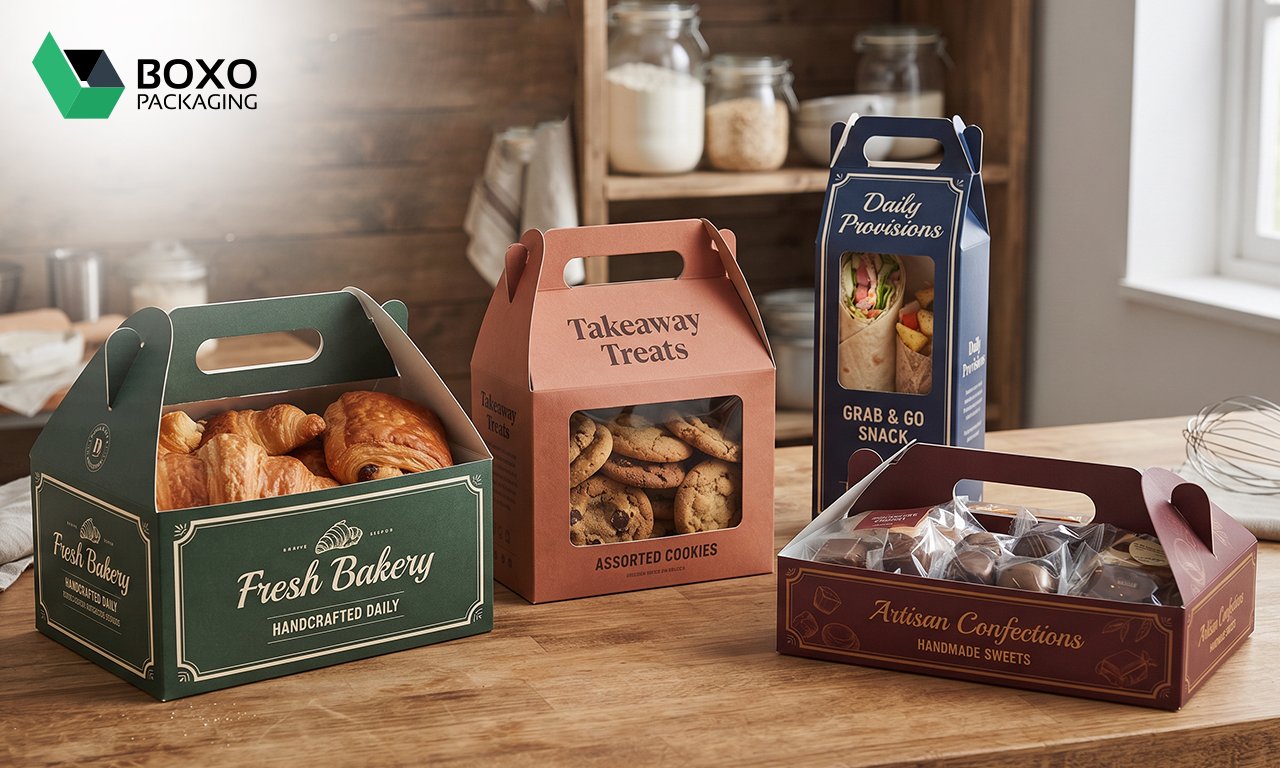
Carrying a packaged product becomes much simpler when the package is designed around how people actually hold and move it. Gable packaging addresses this need by combining a box structure with an integrated handle, allowing users to lift and carry the package without needing a separate bag.
This design is especially useful for products that people purchase in stores, take to events, transport between locations, or carry home after purchase. The handle is only one part of the solution. Box proportions, material strength, closure design, weight distribution, and the space available for the hand all affect carrying comfort.
What Makes Gable Packaging Easy to Carry?
Gable packaging is easier to carry mainly because its handle is built into the package rather than added as a separate accessory. The upper portion of the box forms a carrying point that lets the user lift the container from above.
That simple structural feature changes how the package is handled. Instead of supporting a box from its bottom or holding an additional shopping bag, the user can grasp the integrated handle and move the package directly.
The design can also make short-distance carrying more convenient. A customer can take a bakery purchase from a counter to a car, carry a takeaway meal to a picnic, or transport a small gift without needing another container.
Paperboard packaging designers commonly consider both structural performance and user experience when developing packaging. The Paperboard Packaging Alliance, for example, highlights structural development, protection, functionality, and the recipient’s experience as important elements of packaging design.
How Does the Built-In Handle Improve Handling?
The handle gives the user a clear place to grip the package. This reduces the need to search for a comfortable holding point around the sides or bottom of the box.
A well-designed handle can also keep the package oriented naturally while it is being carried. For products that need to remain upright, this can be useful because the carrying method encourages the user to lift the container from its intended top section.
However, the handle does not automatically make every package comfortable. Its usefulness depends on several structural details:
- The opening needs enough space for a practical grip.
- The material must support the expected load.
- The handle should connect securely with the main box structure.
- The package dimensions should match the product and expected carrying conditions.
- The contents should be positioned so the box does not become awkwardly unbalanced.
These details show why carrying convenience is a structural design issue rather than simply a decorative feature.
Why Does Package Size Matter?
A handle cannot compensate for a poorly sized box. If the package is excessively wide, deep, or heavy, carrying it by the top can still be uncomfortable.
The relationship between product size and box dimensions is therefore important. A package should provide enough internal space to hold the product safely without creating unnecessary bulk.
For example, consider a bakery box containing several food items. A compact box with a centered handle may be easy to lift with one hand. A much larger package containing the same type of product could require two hands, even if it uses a similar handle design.
Size also affects stability. When the contents are concentrated toward one side, the box may tilt while being carried. Internal arrangement, inserts, partitions, or appropriate sizing can help keep the center of the load more manageable.
The same principle applies to retail packaging, gift packaging, event products, and takeaway products. The ideal structure depends on what is inside the box and how people are expected to transport it.
How Does Weight Affect Carrying Comfort?
Weight is one of the most important limitations of a handled box. A handle may make a package easier to grip, but it does not reduce the physical weight of the contents.
As the load increases, the handle and its connection to the box become more important. A package intended for lightweight products may require a different structural approach from one expected to carry heavier contents.
Material selection also matters. Paperboard packaging can be engineered in different grades and structures, while corrugated fiberboard provides additional structural options for applications requiring greater protection or load performance.
The Fibre Box Association maintains technical resources covering the performance and handling of corrugated fiberboard packaging. Its guidance emphasizes that packaging design and handling requirements need to be considered together rather than treated as completely separate issues.
For this reason, packaging designers should establish the expected product weight before finalizing the handle structure.
Where Is This Packaging Format Particularly Useful?
The handle makes this box style useful in situations where customers need to move a product immediately after receiving it.
Food businesses are one obvious example. Bakery items, prepared meals, party foods, and takeaway products may need to travel from a counter to a vehicle or from a vehicle to a destination.
Event Thanksgiving Boxes and gift packaging can also benefit from the same structure. A package that already provides a grip can remove the need for an additional carrier bag in some situations.
Retailers may use handled boxes when the package itself needs to function as both a product container and a convenient carrying solution.
Food packaging also illustrates why packaging formats should be selected according to the way products are actually used. For example, packaging for cinema snacks and event food needs to consider handling as well as containment. Related examples can be seen in discussions of popcorn boxes for cinemas, parties, and food businesses.
The important point is not that every product needs a handle. Instead, the handle becomes valuable when carrying is an expected part of the customer experience.
Can the Handle Make One-Handed Carrying Easier?
Yes, particularly for smaller and moderately loaded packages that can be safely supported by one hand.
One-handed carrying can be convenient when a customer is already holding another item, opening a vehicle door, or walking a short distance. The integrated handle provides a defined grip instead of requiring the user to cradle the package underneath.
Still, one-handed carrying should not be assumed for every design. A package may be technically liftable from its handle but still be uncomfortable because of its weight, dimensions, or contents.
Designers should therefore consider the complete handling scenario.
Ask practical questions such as:
- How heavy will the filled package be?
- Will customers normally carry it for a few seconds or several minutes?
- Does the product need to remain upright?
- Could the contents shift during movement?
- Will the customer likely use one hand or both?
- Does the handle provide enough clearance for a comfortable grip?
- Can the box withstand normal lifting and movement?
Answering these questions before production can prevent a common mistake: designing a visually attractive handle that is not practical when the package is filled.
How Does Handle Placement Affect Stability?
Handle position can influence how a box behaves while it is being carried. A centrally positioned grip generally gives the user a more predictable lifting point, provided the contents are also reasonably balanced.
If the product’s weight is concentrated heavily on one side, the package may lean when lifted. This can affect both comfort and product security.
The internal structure can therefore be just as important as the external handle. Dividers, inserts, fitted compartments, or appropriate void control may help keep the product positioned correctly.
This is particularly relevant when packaging several smaller items together. A box containing multiple products can behave differently from one containing a single item because the load may move or become uneven.
Good packaging design considers the product, structure, and user interaction as one system. Industry design guidance also emphasizes the need for packaging to protect and secure its intended contents during shipping and handling.
What Materials Work for Handled Boxes?
Material choice depends on the product, expected weight, protection requirements, appearance, and intended use.
Paperboard is commonly used for many retail and consumer packaging applications because it can be structurally formed into different carton styles. Fiber-based packaging can also be designed around specific functional requirements rather than treated as a single generic material category.
The Paperboard Packaging Alliance notes that paperboard packaging design involves consideration of material attributes, structural development, and real-world packaging applications.
For heavier or more demanding applications, corrugated structures may be more appropriate. The correct material should be selected according to the filled package rather than based solely on how the empty box looks.
A lightweight package can be efficient for carrying, but it still needs enough strength for its intended use. Conversely, using a much heavier structure than necessary can add material and bulk without improving the customer’s experience.
What Common Mistakes Should Designers Avoid?
Several mistakes can reduce the carrying benefit of a handled box.
Making the Handle Too Small
A narrow opening can make the package difficult to grip. Even when the box is structurally strong, poor hand clearance can make carrying uncomfortable.
Ignoring the Filled Weight
Testing an empty package does not provide a realistic picture of how it will perform. The filled box should be evaluated under expected conditions.
Creating an Unbalanced Package
A heavy product positioned far from the center can cause the package to tilt when lifted.
Treating Appearance as More Important Than Function
A decorative handle may look attractive but still fail to provide a practical grip. Structural functionality should be considered alongside visual design.
Forgetting Product Movement
Loose contents can shift while the package is being carried. The box should account for movement where the product requires protection or stability.
Choosing Material Without Considering the Application
A material that works well for a lightweight item may not be suitable for a substantially heavier product. Material selection should follow the requirements of the filled package.
How Can Businesses Choose the Right Gable Box Design?
Start with the product rather than the appearance of the box.
Measure the product and determine its approximate filled weight. Then consider how customers will receive, carry, store, and eventually dispose of the package.
Next, define the carrying situation. A box intended for a short walk from a retail counter has different requirements from one expected to travel in a vehicle or accompany a customer to an outdoor event.
A practical evaluation should consider:
- Product dimensions
- Filled package weight
- Handle size and position
- Material and board strength
- Closure security
- Internal product stability
- Expected carrying distance
- Moisture or environmental exposure
- Required protection
- Storage and transportation requirements
A prototype is particularly useful because handling problems can be difficult to identify from a flat design or digital drawing alone. Physical prototypes allow designers to examine grip clearance, balance, strength, opening behavior, and overall user interaction.
Paperboard packaging design programs frequently use physical prototypes and structural development as part of their design process. The Paperboard Packaging Alliance’s current design challenge, for example, requires prototype development and structural exploration as part of the submission process.
When Might Another Packaging Format Be Better?
A handled box is not automatically the right solution.
A different package may be more suitable when the product is exceptionally heavy, unusually shaped, highly fragile, or difficult to balance. Products requiring specialized protection may need inserts, stronger structures, or dedicated transport packaging.
A conventional carton can also make more sense when customers are unlikely to carry the package individually. Similarly, products that are normally shipped inside a larger protective container may not need an integrated retail handle.
The goal should therefore be functional suitability, not simply adding a handle because the feature looks convenient.
What Should You Consider Before Order Gable Packaging Boxes
Gable packaging makes products easier to carry by integrating the carrying function directly into the box structure. The handle provides a defined grip and can make short-distance transportation simpler, particularly for lightweight and moderately loaded products.
However, carrying convenience depends on more than the handle itself. Box dimensions, material strength, weight distribution, internal product stability, handle clearance, and closure design all contribute to the final experience.
The most effective approach is to design the package around the filled product and the real situation in which customers will carry it. When structure and usability are considered together, a handled box can serve as both a protective container and a practical carrying solution.