
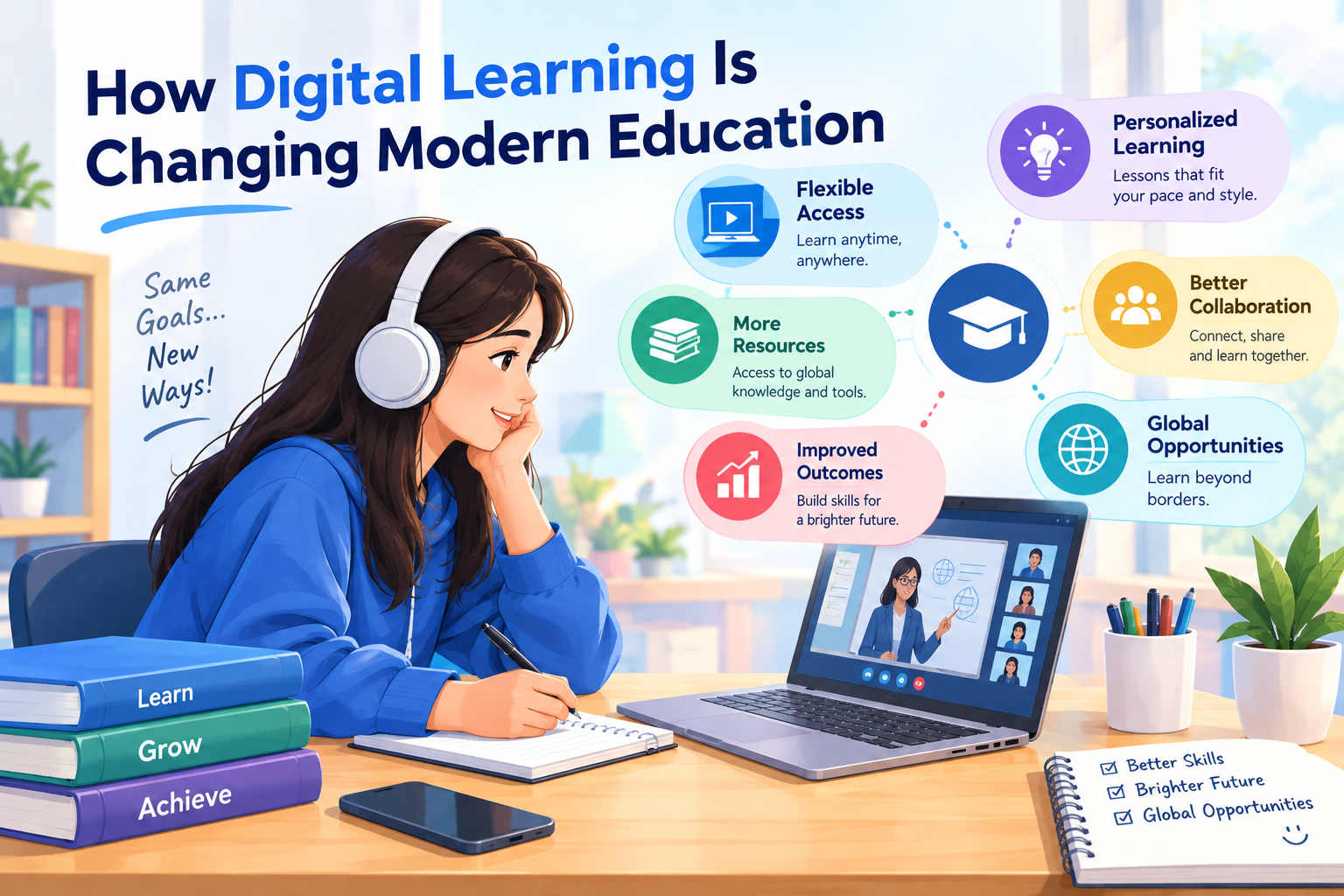
Students no longer need to depend entirely on classroom lessons and printed books to understand a subject. A mobile phone, laptop or internet connection can provide access to recorded lectures, online courses, digital libraries and practice exercises. These resources have changed how students study and prepare for examinations.
Digital learning gives learners more control over when and where they study. A student who struggles with a topic can revisit a lesson, while someone preparing for an examination can use online quizzes to check their knowledge. The experience is not always easy, though. Internet problems, distractions and poor time management can affect learning.
What Does Digital Learning Mean?
Digital learning involves using electronic devices and online resources to support education. It includes virtual classrooms, educational applications, video lessons, online assessments and digital textbooks.
Some schools and universities use these tools alongside classroom teaching. Others offer courses that students can complete online.
Consider a student who does not understand a concept during a lecture. Instead of moving on without clarification, the student can watch another explanation, read related material and practise similar questions. This gives them another opportunity to understand the subject before moving to the next topic.
How Has Digital Learning Changed Education?
Learning is no longer limited to a particular classroom or timetable. Students can access course materials from different locations and revisit lessons when they need extra support.
A recorded lecture can help someone review a difficult topic before an examination. Online discussion boards allow students to exchange ideas, while shared documents make group assignment help service easier to organise.
Traditional teaching remains valuable. Classroom discussions, practical activities and direct feedback from teachers help students develop skills that a screen cannot always provide. Digital resources work best when they support these learning experiences rather than replace them completely.
Why Is Digital Learning Useful for Students?
The value of digital education depends on how students use the resources available to them. Several benefits can make everyday study more manageable.
How Does It Improve Access to Education?
Online resources allow students to explore subjects beyond the materials provided in class. Digital libraries, educational websites and recorded lessons can offer different explanations of the same concept.
This is particularly useful when a student needs additional practice or wants to explore a topic in greater depth. Access still depends on factors such as internet availability, device quality and whether particular resources are free.
Can Students Learn at Their Own Pace?
Yes. Recorded lessons and self-paced courses allow learners to spend more time on difficult topics without holding back the entire class.
For example, a student learning statistics may need to repeat a lesson on probability several times. Another student might understand it quickly and move directly to practice questions.
This flexibility allows students to identify their own learning needs. They still need to follow course requirements and complete assessments by the required deadlines.
Does Digital Learning Help Students Develop New Skills?
Working with digital platforms can improve research, communication and information management skills. Students learn to organise files, participate in online discussions and prepare digital presentations.
These abilities can also be useful in the workplace. Many organisations rely on online meetings, shared documents and digital communication, making responsible technology use an important skill.
Which Digital Tools Do Students Use?
Different educational tools support different tasks. Choosing the right one depends on the subject and the student’s learning goals.
- Learning management systems provide course notes, announcements, assignment submissions and assessment results.
- Video conferencing platforms support live lessons and discussions with teachers.
- Digital libraries help students find books, academic papers and research materials.
- Educational applications offer language exercises, quizzes and subject-specific practice.
- AI learning tools can explain concepts, suggest practice questions and help organise study notes.
Students need to check the accuracy of online information. AI tools can produce incorrect answers, so important facts should be checked against reliable sources. Learners must also follow their institution’s academic integrity rules.
How Can Digital Learning Support Better Grades?
Technology can make revision easier, but improved results still depend on regular effort and a clear study plan.
A student preparing for a biology examination might watch a recorded lesson, create short notes and complete an online quiz. The quiz results can reveal which topics need more attention. The student can then revisit those areas instead of spending equal time on everything.
Digital calendars also help students track deadlines and divide large Assignment Writing Help into smaller tasks. Research databases can provide useful sources, while note-taking applications help organise information before writing begins.
These tools are most useful when students actively work with the material. Watching videos without testing their understanding may feel productive but does not always lead to better results. Practice, feedback and revision remain essential.
What Problems Can Digital Learning Create?
Digital education offers flexibility, but students may face practical and personal challenges.
Can Internet Problems Affect Learning?
An unstable connection can interrupt live classes, delay downloads and make online assessments difficult. Some students also share devices with family members, which limits their study time.
Downloading available materials in advance and using offline resources can help where possible. Schools and universities can support learners by providing access to computer facilities and suitable learning materials.
Why Is It Hard to Stay Focused Online?
The same device used for studying also provides access to games, messages and social media. Switching between these activities can interrupt concentration.
Students can reduce distractions by silencing notifications, choosing a specific study period and keeping only necessary tabs open. A short task list can also make it easier to return to work after a break.
Do Students Miss Personal Interaction?
Some learners find online study isolating because they have fewer opportunities to speak with teachers and classmates informally. Questions may also remain unanswered when communication is limited.
Participating in live discussions, joining study groups and arranging feedback sessions can improve the experience. Direct interaction remains important for building communication skills and discussing difficult ideas.
Is All Online Information Reliable?
No. Websites can contain outdated information, unsupported claims or misleading explanations. Students need to evaluate sources before using them in academic work.
Checking the author’s background, publication date and supporting evidence is a useful starting point. University libraries and recognised academic databases can help students locate more reliable material.
How Can Students Make Online Learning More Effective?
A few practical habits can improve the way students use digital resources.
Set a clear target for each session. Choose a specific task, such as reviewing one lecture or completing ten practice questions.
Keep study materials organised. Save files in clearly named folders so notes and assignments are easy to find.
Write notes in your own words. Focus on the main ideas rather than copying every sentence from a presentation.
Test your understanding. Answer practice questions or explain the topic without looking at your notes.
Plan around deadlines. Use a calendar to divide larger assignments into manageable stages.
Take breaks when needed. Short breaks can help maintain concentration during longer study sessions.
Ask for help early. Contact a teacher or discuss the topic with classmates when something remains unclear.
These habits encourage students to take responsibility for their learning instead of relying entirely on technology.
What Will Digital Education Look Like in the Future?
Digital learning will continue to develop as educational technology changes. Artificial intelligence, virtual simulations and interactive platforms may give students new ways to explore difficult subjects.
Engineering students could use simulations to study how machines operate. Language learners may practise conversations through digital applications, while students in other fields can use online courses to explore specialist topics.
Access and quality will remain important. Not every student has the same devices, internet connection or level of digital confidence. Teachers will also remain important for explaining complex ideas, assessing progress and helping students develop independent thinking.
The strongest learning experiences will combine useful technology with good teaching and meaningful interaction.
Conclusion
Digital learning gives students more ways to access information, practise skills and organise their studies. Its benefits depend on reliable resources, regular effort and responsible technology use. When combined with effective teaching, it can make education more flexible and support continued learning.
Frequently Asked Questions
1. What is digital learning?
Digital learning uses technology, including online classes, educational applications and digital resources, to support education.
2. What are the main benefits of digital learning?
It offers flexible study options, access to learning materials, independent practice and opportunities to develop digital skills.
3. How does technology improve education?
Technology helps students access information, review lessons, communicate with teachers and practise different subjects.
4. What are the disadvantages of digital learning?
Common challenges include internet issues, digital distractions, limited personal interaction and unreliable online information.
5. Is digital learning effective for students?
Yes. It can support learning when students practise regularly, use reliable resources and receive appropriate guidance.
6. Which tools are used for digital learning?
Common tools include virtual classrooms, learning management systems, digital libraries and educational applications.
7. How can students stay focused during online classes?
Students can reduce distractions, silence notifications, prepare their study space and set clear learning goals.
8. What is the future of digital learning?
Future developments may include more interactive lessons, virtual simulations and AI-supported learning resources.