
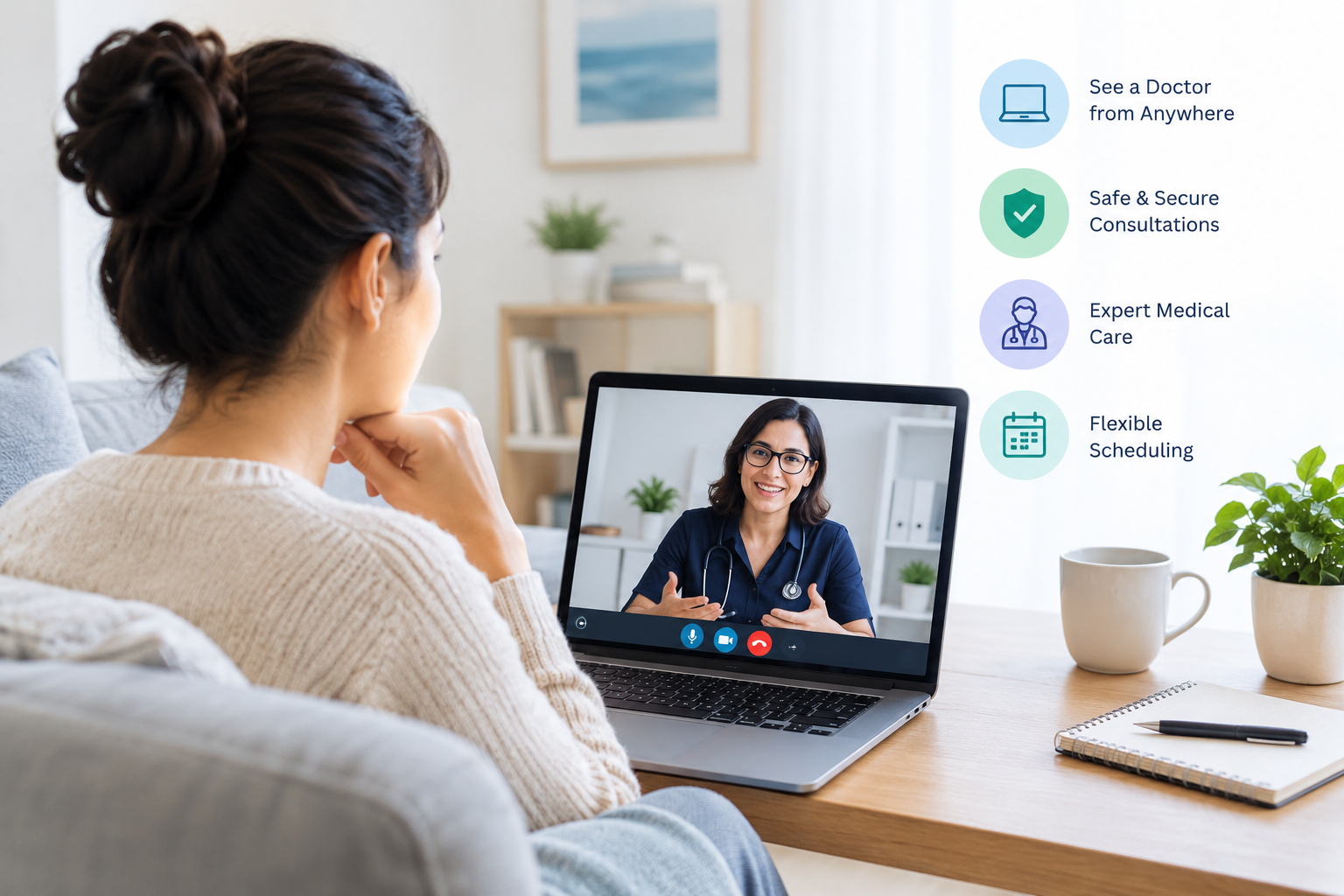
Getting medical advice no longer always means travelling to a medical centre, sitting in a waiting room and rearranging your day around an appointment. Telehealth doctors allow patients to consult healthcare professionals remotely through video or telephone, where this is clinically appropriate.
For many everyday health concerns, this can make accessing primary care more convenient. It can also be useful for people who live far from medical practices, have mobility or transport difficulties, or simply need medical advice without an unnecessary trip.
However, telehealth is not a replacement for every type of medical care. Understanding what an online consultation can and cannot provide is important before booking an appointment.
What Are Telehealth Doctors?
Telehealth doctors are medical practitioners who provide consultations remotely, usually through a secure video platform or telephone.
In Australia, telehealth is an established part of healthcare delivery. The Australian Government describes telehealth as consulting a healthcare provider by phone or video when a physical examination is not required and an in-person appointment is not necessary or practical. Telehealth can be used for assessment, treatment and prevention where appropriate.
An online GP consultation is therefore more than simply receiving general health information online. A consultation involves communicating with a qualified healthcare professional who assesses the information you provide and determines what care may be appropriate.
The doctor may discuss symptoms, medical history, medications, previous diagnoses and other relevant factors before deciding whether remote care is suitable.
How Does a Telehealth Appointment Work?
Although the exact process varies between providers, an online medical consultation generally follows several straightforward steps.
1. Book the consultation
Patients usually select an available appointment time and provide basic information about the reason for seeking care.
Some services offer video appointments, while others may provide consultations by telephone. Video can allow the doctor and patient to communicate face-to-face, while telephone consultations can be useful when video is unavailable or unnecessary.
2. Prepare for the appointment
Before speaking with the doctor, it helps to have relevant information nearby.
This might include:
- A list of current medications
- Previous diagnoses or relevant medical history
- Recent test results or reports
- Information about when symptoms started
- Any treatments already tried
- Questions you want to ask the doctor
Being prepared can make the consultation more focused and help the doctor understand the situation more clearly.
3. Speak with the doctor
During the consultation, the doctor will ask questions about your symptoms and circumstances.
For example, someone experiencing a persistent cough may be asked when it started, whether it is getting worse, whether they have a fever, what other symptoms are present and whether they have relevant medical conditions.
The doctor then considers whether the information available remotely is sufficient to provide appropriate care.
4. Follow the recommended next steps
Depending on the consultation, the doctor may provide medical advice, recommend self-care, arrange further investigations, prescribe medication where appropriate, or recommend an in-person appointment.
Telehealth can therefore be part of a broader healthcare pathway rather than a completely separate form of medicine.
What Can Telehealth Doctors Help With?
Telehealth can be useful for a range of health concerns when a physical examination or immediate face-to-face assessment is not required.
Examples can include:
- Common minor illnesses
- Medication reviews
- Some ongoing health conditions
- Follow-up consultations
- Some skin concerns that can be assessed visually
- Some mental health concerns
- General health advice
- Discussion of test results
- Some prescription-related consultations
- Medical certificates and other appropriate documentation
The suitability of an online consultation depends on the individual situation. A doctor may decide that an in-person assessment is necessary after discussing the symptoms.
This is one reason telehealth should not be viewed simply as a faster version of a traditional appointment. The key question is whether the healthcare issue can be assessed safely using the available information and technology.
When Is Telehealth a Practical Alternative to an In-Person Visit?
Convenience is one of the most obvious advantages of telehealth, but accessibility can be equally important.
Someone living in a rural or remote area may otherwise need to travel a significant distance for a routine appointment. The Australian Government notes that telehealth can improve access to healthcare for people who would otherwise face long travel distances, particularly in rural and remote communities.
Telehealth can also be practical when:
- You have difficulty taking time away from work
- You have caring responsibilities
- Transport is inconvenient
- You are travelling
- You need a follow-up consultation
- You have an issue that does not appear to require a physical examination
- You want to discuss an existing health concern with a GP
For Australians comparing remote healthcare options, an online GP service such as HelloGP’s online medical care can be one option to consider alongside local medical practices and other telehealth providers.
The important point is not simply choosing the most convenient service. Patients should consider whether the service provides appropriate clinical care and makes clear when an in-person assessment is required.
What Are the Limitations of Telehealth?
Telehealth has clear benefits, but it also has limitations.
A doctor cannot perform every physical examination remotely. Some symptoms may require the use of medical equipment, vital-sign measurements, laboratory testing or imaging before a diagnosis can be made.
For example, a patient with certain types of abdominal pain may need an examination that cannot be performed effectively through a video call. Similarly, some injuries, severe infections or unexplained symptoms may require an in-person assessment.
A responsible telehealth provider should recognise these limitations rather than attempting to manage every problem remotely.
Australian health guidance also emphasises that virtual care should only be used when it is safe and appropriate. If a healthcare professional determines that an online consultation is insufficient, the patient may be directed to an in-person service or another appropriate level of care.
Telehealth is not for emergencies
Telehealth should not be used as a substitute for emergency medical care.
If someone has potentially life-threatening symptoms such as severe difficulty breathing, chest pain or sudden weakness on one side of the body, they should seek emergency assistance rather than waiting for an online GP appointment. Healthdirect advises calling 000 for immediate medical emergencies.
How to Prepare for an Online GP Consultation
A few simple steps can make an online appointment more useful.
Find a private location. Healthcare conversations can involve sensitive information, so choose somewhere you can speak comfortably without being overheard.
Check your technology. If the appointment uses video, test your camera, microphone and internet connection beforehand.
Write down your symptoms. Include when they started, whether they have changed and anything that makes them better or worse.
Prepare your medication list. Include prescription medicines, over-the-counter products and relevant supplements.
Have important records available. Recent pathology results, imaging reports or specialist letters may be useful depending on the reason for your consultation.
Be honest about your symptoms. The doctor relies heavily on the information you provide during a remote consultation, so leaving out important details can affect the assessment.
How to Choose a Telehealth Doctor
Not all online healthcare services operate in exactly the same way. Before booking, patients should consider several practical and clinical factors.
Check the doctor’s credentials
In Australia, patients can use the Australian Health Practitioner Regulation Agency’s register to check whether a healthcare practitioner is registered.
Understand how consultations are delivered
Find out whether the service provides video consultations, telephone appointments or both. Also check what happens if the doctor determines that you need an in-person assessment.
Check costs
Telehealth consultations may involve different fees depending on the provider and whether the appointment is eligible for Medicare benefits. Healthdirect notes that some GPs bulk bill while others charge a gap or consultation fee.
Look at privacy and information handling
Healthcare information is sensitive. Patients should understand how their information is collected, stored and shared and whether the platform uses appropriate privacy and security measures.
Look for continuity of care
For ongoing health concerns, it can be useful to know whether the service supports follow-up care and communication with other healthcare professionals when needed.
Telehealth vs Traditional GP Appointments
Telehealth and face-to-face appointments are not necessarily competing approaches. In many situations, they can complement each other.
| Telehealth | In-person GP appointment |
| Convenient for remote consultations | Allows a physical examination |
| No travel to the practice | Access to equipment and clinical measurements |
| Useful for suitable follow-ups | Better suited to issues requiring hands-on assessment |
| Can improve access for remote patients | Useful when symptoms are difficult to assess remotely |
| May be available by video or phone | Provides direct face-to-face interaction |
The appropriate option depends on the medical issue rather than convenience alone.
Australian Government guidance states that ongoing telehealth services are available where the healthcare professional considers them clinically appropriate and safe.
Frequently Asked Questions
Are telehealth doctors real doctors?
Yes. Telehealth is a method of delivering healthcare remotely. In Australia, registered GPs and other healthcare professionals can provide consultations through telephone or video where clinically appropriate.
Can an online GP prescribe medication?
A doctor may prescribe medication following a telehealth consultation when they determine that prescribing is clinically appropriate and legally permitted. A prescription is not automatically provided simply because a patient requests one.
Is a video consultation better than a phone consultation?
Neither is universally better. Video can allow the doctor to see the patient and, in some circumstances, observe visible symptoms. A telephone consultation may be sufficient for certain issues. The appropriate format depends on the clinical situation.
Can telehealth doctors diagnose health conditions?
Doctors can assess and diagnose some conditions remotely, but not every condition can be diagnosed safely without a physical examination, testing or imaging. If further assessment is required, the doctor may recommend an in-person appointment.
Is telehealth suitable for ongoing health conditions?
It can be useful for some chronic conditions, particularly for follow-up appointments, medication reviews and discussing results. However, ongoing conditions may still require periodic physical examinations, testing or monitoring.
Conclusion
Telehealth has become a practical part of modern healthcare, giving patients another way to communicate with doctors without always travelling to a medical practice. For suitable health concerns, an online GP consultation can save time and make healthcare easier to access.
But convenience should not be the only consideration. Patients should choose appropriately registered healthcare professionals, understand the costs and privacy arrangements, provide accurate information during consultations and recognise when an issue requires face-to-face assessment.
Used in the right circumstances, telehealth is not about replacing traditional healthcare. It is about adding another accessible way for patients and doctors to connect.