
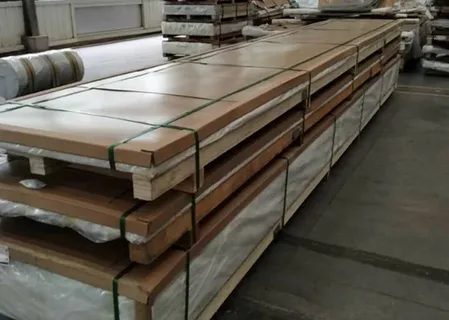
The 5083 marine grade aluminum alloy is one of the most widely used materials in marine and offshore engineering due to its excellent strength, corrosion resistance, and weldability. It belongs to the 5xxx series aluminum alloys, which are primarily alloyed with magnesium. The unique chemical composition of this alloy makes it especially suitable for harsh saltwater environments where durability is critical.
Unlike many other aluminum alloys, 5083 is not strengthened by heat treatment. Instead, it gains strength through strain hardening and solid solution strengthening. This gives it a stable structure and reliable performance even under extreme environmental conditions.
Key highlights of its composition and importance include:
- High magnesium content for strength and corrosion resistance
- Excellent performance in seawater and marine atmospheres
- Non-heat-treatable alloy strengthened by cold working
- Widely used in shipbuilding and offshore structures
The balance of alloying elements in 5083 marine grade aluminum ensures it maintains structural integrity while resisting corrosion, making it a preferred choice in marine industries worldwide.
Primary Alloying Elements in 5083 Marine Grade Aluminum
The composition of 5083 marine grade aluminum is carefully engineered, with magnesium being the dominant alloying element. Typically, magnesium content ranges between 4.0% and 4.9%, which significantly enhances strength and resistance to seawater corrosion. This makes the alloy ideal for long-term exposure in marine environments.
Manganese is another important element in the alloy, usually present in small amounts. It improves the overall strength and controls grain structure, which helps maintain mechanical stability during fabrication and welding processes.
Key primary elements include:
- Magnesium (Mg): Improves strength and corrosion resistance
- Manganese (Mn): Enhances grain structure stability
- Aluminum (Al): Base metal providing lightweight properties
- Trace elements: Controlled for performance consistency
The synergy between these elements ensures that 5083 marine grade aluminum delivers high mechanical strength without compromising its lightweight nature.
Role of Trace Elements in Alloy Performance
In addition to primary elements, 5083 marine grade aluminum contains trace amounts of chromium, iron, silicon, copper, and zinc. Although present in very small quantities, these elements play a crucial role in enhancing specific properties of the alloy.
For example, chromium helps improve resistance to stress corrosion cracking, which is essential for marine applications. Iron and silicon are typically kept at controlled levels to prevent brittleness and maintain ductility.
Key effects of trace elements include:
- Chromium: Enhances resistance to stress corrosion cracking
- Iron: Improves hardness but must be controlled
- Silicon: Affects casting and mechanical behavior
- Copper and zinc: Kept minimal to avoid corrosion risks
The careful balance of these trace elements ensures that 5083 marine grade aluminum remains highly durable while maintaining excellent formability and weldability.
Mechanical Properties Derived from Composition
The chemical composition of 5083 marine grade aluminum directly influences its mechanical properties. Due to its high magnesium content, it offers excellent tensile strength compared to many other non-heat-treatable aluminum alloys. This makes it suitable for heavy-duty marine and structural applications.
The alloy also exhibits outstanding fatigue resistance, which is critical for components exposed to continuous wave motion and mechanical stress in marine environments. Its ability to retain strength after welding further enhances its usability in shipbuilding.
Key mechanical advantages include:
- High tensile strength for structural applications
- Excellent fatigue resistance under cyclic loads
- Good weldability without significant strength loss
- High resistance to seawater-induced corrosion
Because of these properties, 5083 marine grade aluminum is widely used in ship hulls, pressure vessels, and offshore platforms where both strength and durability are essential.
Industrial Applications Based on Alloy Composition
The composition of 5083 marine grade aluminum makes it highly versatile across multiple industries, especially in marine engineering. Its resistance to saltwater corrosion and strong mechanical performance make it a top choice for shipbuilding and offshore structures.
Beyond marine use, it is also used in transportation, cryogenic storage tanks, and pressure vessels. Its ability to perform well in low-temperature environments further expands its industrial applications.
Key applications include:
- Ship hulls and superstructures in marine vessels
- Offshore oil and gas platform components
- Cryogenic tanks for liquefied gases
- Heavy-duty transportation and automotive parts
The combination of magnesium-rich composition and controlled trace elements ensures that 5083 marine grade aluminum delivers long-term reliability in demanding environments.
Conclusion
The 5083 marine grade aluminum alloy is a highly engineered material designed for performance in extreme marine and industrial conditions. Its carefully balanced composition—dominated by magnesium and supported by manganese and trace elements—gives it a unique combination of strength, corrosion resistance, and weldability.
From shipbuilding to offshore structures and cryogenic applications, this alloy continues to play a vital role in modern engineering. Understanding its composition helps explain why it remains one of the most trusted materials in environments where durability and reliability are non-negotiable.
