
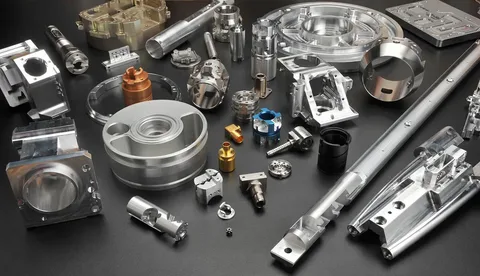
Modern manufacturing industries demand extreme precision, durability, and consistency, especially in sectors like aerospace and automotive. This is where custom CNC machined parts play a vital role. These components are engineered using advanced computer numerical control technology to meet strict design and performance requirements.
From lightweight aircraft structures to high-performance automotive engines, CNC machining ensures that every part is produced with exceptional accuracy. As industries evolve, the demand for reliable and high-quality custom CNC solutions continues to grow rapidly.
Importance of Custom CNC Machined Parts in Aerospace Industry
The aerospace industry requires components that can withstand extreme pressure, temperature changes, and constant stress. Custom CNC machined parts are essential because they provide the precision and reliability needed for flight safety and performance. Even the smallest error in a component can affect the entire system, making CNC machining indispensable.
In aerospace manufacturing, materials like titanium, aluminum, and high-strength alloys are commonly used. CNC technology ensures these materials are shaped with micrometer-level accuracy, reducing waste and improving efficiency.
Key Applications in Aerospace:
- Aircraft engine components
- Landing gear parts
- Structural airframe components
- Turbine blades and housings
- Avionics system enclosures
The ability to produce complex geometries with tight tolerances makes CNC machining a preferred method in aerospace production. Manufacturers rely on it to ensure safety, compliance, and long-term performance.
Role of Custom CNC Machined Parts in Automotive Engineering
The automotive industry depends heavily on innovation, performance, and cost-efficiency. Custom CNC machined parts help manufacturers create high-quality engine components, transmission systems, and custom vehicle designs with consistent precision.
CNC machining allows automotive engineers to rapidly prototype and test new designs before mass production. This reduces development time and ensures that each component meets strict performance standards.
Key Automotive Applications:
- Engine blocks and cylinder heads
- Gearbox and transmission parts
- Suspension system components
- Brake system parts
- Custom performance upgrades
With the rise of electric vehicles and advanced automotive technologies, CNC machining continues to evolve, supporting lightweight and energy-efficient designs that improve overall vehicle performance.
Advantages of Using Custom CNC Machined Parts
One of the biggest advantages of custom CNC machined parts is their unmatched precision. CNC machines follow digital instructions, ensuring every cut and shape matches exact specifications. This level of accuracy is critical in both aerospace and automotive industries.
Another major benefit is consistency. Whether producing one part or thousands, CNC machining ensures uniform quality across all units, reducing the risk of defects and failures.
Key Benefits:
- High precision and accuracy
- Repeatable and consistent production
- Reduced material waste
- Ability to create complex designs
- Faster production cycles
Additionally, CNC machining improves efficiency by automating the manufacturing process. This reduces human error and allows manufacturers to scale production without compromising quality.
Materials Used in Custom CNC Machined Parts Production
Material selection is a crucial factor in the performance of custom CNC machined parts. Different industries require materials that meet specific strength, weight, and durability requirements.
In aerospace, lightweight yet strong materials like aluminum alloys and titanium are commonly used. In contrast, automotive applications may use steel, brass, or engineering plastics depending on the component’s function.
Common CNC Machining Materials:
- Aluminum alloys (lightweight and corrosion-resistant)
- Titanium (high strength and heat resistance)
- Stainless steel (durability and wear resistance)
- Brass (excellent machinability and conductivity)
- Engineering plastics (lightweight and flexible applications)
Choosing the right material ensures that each part performs efficiently under real-world conditions. CNC machining allows precise handling of these materials without compromising their structural integrity.
Future Trends in Custom CNC Machining Technology
The future of custom CNC machined parts is closely linked to automation, artificial intelligence, and advanced manufacturing technologies. Smart CNC machines are now capable of self-monitoring and adjusting operations in real time.
Industries are also adopting hybrid manufacturing techniques that combine CNC machining with 3D printing. This allows for even more complex designs and faster production cycles.
Future Trends Include:
- AI-powered CNC machining systems
- Integration with Industry 4.0 technologies
- Hybrid manufacturing (CNC + 3D printing)
- Increased automation and robotics
- Sustainable and energy-efficient machining processes
These innovations are transforming how aerospace and automotive components are designed and manufactured, leading to faster production and improved product quality.
Conclusion
Custom CNC machined parts are a cornerstone of modern aerospace and automotive manufacturing. Their precision, durability, and versatility make them essential for producing high-performance components that meet strict industry standards.
As technology continues to evolve, CNC machining will become even more advanced, offering greater efficiency, improved material utilization, and enhanced design capabilities. For industries that rely on accuracy and reliability, CNC machining remains the backbone of innovation and production excellence.
