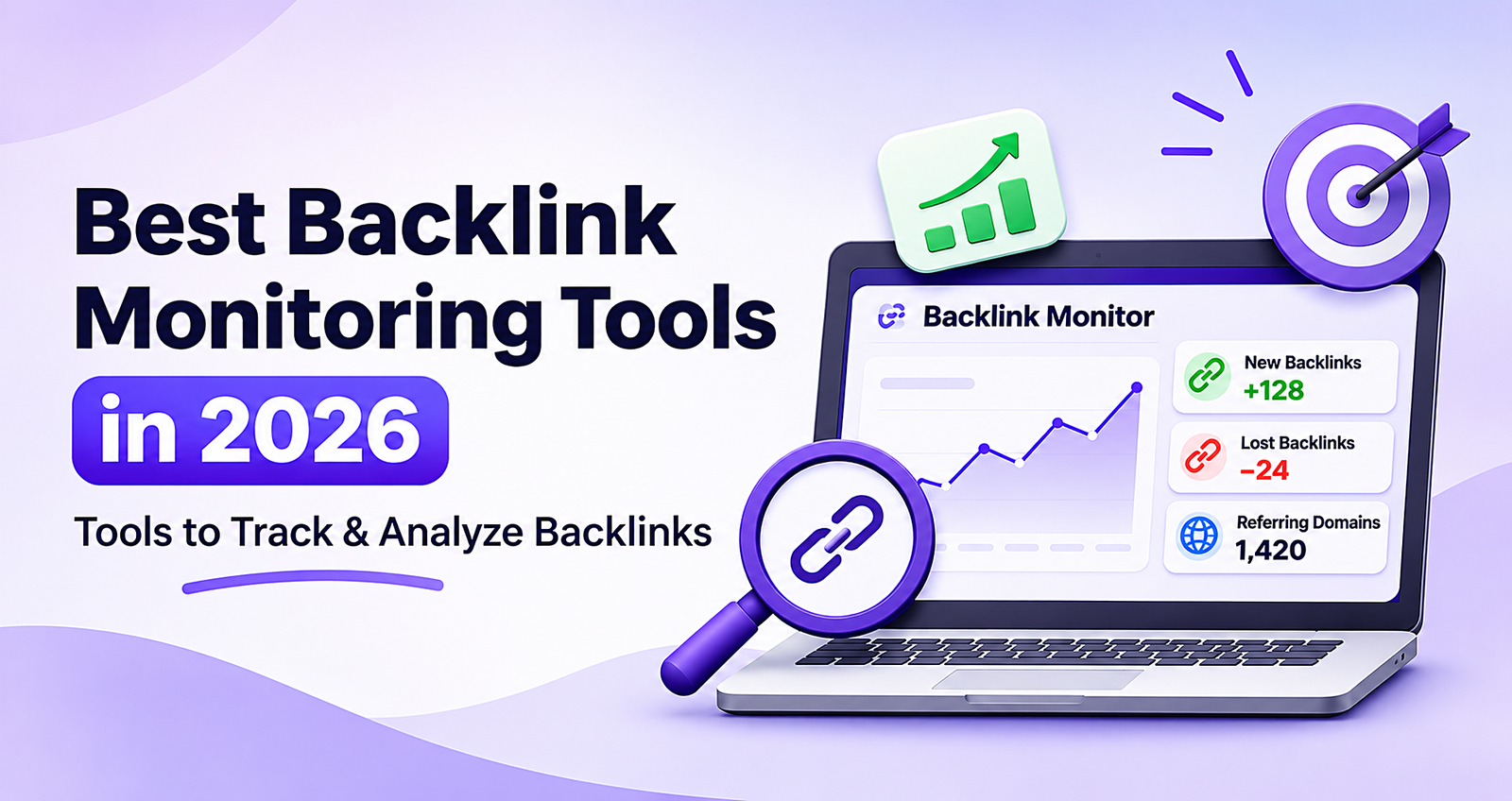
Backlinks remain an important part of search engine optimization (SEO). They help search engines discover content, understand relationships between websites, and evaluate the authority and relevance of web pages. However, building backlinks is only one part of a successful SEO strategy. Monitoring existing backlinks is equally important.
Imagine investing time and resources in acquiring quality editorial backlinks, guest post placements, and industry mentions. After a few months, some of those links might disappear, change to nofollow, or point to incorrect URLs. Without proper monitoring, you may not even notice these changes.
This is why backlink monitoring tools are essential for SEO professionals, digital marketing agencies, and SaaS businesses.
Several platforms provide backlink analysis and monitoring capabilities, but choosing the right one can be challenging. Ahrefs, Semrush, and Moz are among the most popular paid SEO platforms, while free solutions like Google Search Console and Bing Webmaster Tools provide useful backlink insights.
In this guide, we compare Ahrefs vs. Semrush vs. Moz vs. free backlink tools to help you understand their features, benefits, limitations, and ideal use cases in 2026.
What Is Backlink Monitoring?
Backlink monitoring is the process of regularly checking and analyzing websites that link to your domain.
It helps you understand how your backlink profile changes over time and whether your acquired links remain active and relevant.
For example, if a popular industry website publishes an article containing a backlink to your website, you want to ensure that the link remains available and points to the correct destination.
Backlink monitoring tools automate this process by collecting backlink information and identifying changes.
Common backlink monitoring activities include:
-
Tracking newly discovered backlinks.
-
Identifying lost or removed backlinks.
-
Checking referring domains.
-
Monitoring anchor text distribution.
-
Reviewing follow and nofollow attributes.
-
Analyzing competitor backlink profiles.
-
Investigating potentially suspicious links.
Why Are Backlink Monitoring Tools Important?
Regular backlink monitoring helps businesses maintain their link-building efforts and identify opportunities for improvement.
1. Identify New and Lost Backlinks
Backlinks can disappear when website owners update content, delete pages, or remove external links. Monitoring tools help identify these changes so you can investigate valuable lost placements and request restoration when appropriate.
2. Analyze Backlink Quality
Not every backlink provides the same value. Website relevance, editorial quality, content context, and natural placement are important factors when evaluating links.
3. Monitor Competitor Backlinks
Competitor backlink analysis helps identify websites, publications, and industry resources that may provide relevant link-building opportunities.
4. Measure Link-Building Performance
Businesses investing in guest posting, digital PR, and editorial backlinks can use monitoring tools to verify placements and evaluate campaign performance.
5. Maintain a Healthy Link Profile
Monitoring helps identify unusual backlink patterns and potentially problematic links that may require further investigation.
1. Ahrefs: Best for Comprehensive Backlink Analysis
Ahrefs is one of the most recognized SEO platforms for backlink analysis and competitor research. Its Site Explorer provides detailed information about backlinks, referring domains, anchor text, and competitor link profiles.
For SEO agencies and SaaS businesses, Ahrefs is useful for discovering new link-building opportunities and understanding how competitors acquire backlinks.
Key Features of Ahrefs
-
Backlink Monitoring: Discover new and lost backlinks.
-
Referring Domain Analysis: Understand which websites link to your domain.
-
Anchor Text Research: Analyze the words and phrases used in backlinks.
-
Competitor Analysis: Identify websites linking to competing businesses.
-
Broken Link Research: Discover broken pages and potential link-building opportunities.
-
Backlink Alerts: Receive notifications about newly discovered or lost links through available alert features.
Advantages
Ahrefs offers extensive backlink research capabilities and useful competitor analysis features. Its interface makes it easier to investigate link profiles and discover relevant websites for outreach campaigns.
Another advantage is its ability to help SEO professionals identify content and pages attracting backlinks within their industries.
Limitations
Ahrefs is a premium SEO platform, and its advanced features can be expensive for smaller businesses. Its backlink database may also differ from other SEO platforms.
Best For: SEO agencies, SaaS companies, experienced link builders, and businesses managing large backlink campaigns.
2. Semrush: Best for All-in-One SEO Management
Semrush is an all-in-one digital marketing platform that combines backlink analysis with keyword research, competitor analysis, site audits, and content marketing tools.
Its Backlink Analytics feature helps users investigate backlink profiles, identify new and lost links, and compare competitor websites.
The Backlink Audit tool also helps identify potentially harmful backlink patterns that may require further investigation.
Key Features of Semrush
-
Backlink Analytics: Analyze backlinks and referring domains.
-
Backlink Audit: Review potentially risky backlinks.
-
Competitor Research: Compare backlink profiles with competitors.
-
Anchor Text Analysis: Understand backlink anchor text distribution.
-
New and Lost Links: Monitor changes in backlink profiles.
-
Link Building Tool: Discover and manage potential link-building opportunities.
Advantages
Semrush provides several SEO capabilities in one platform. Businesses can manage backlink research, keyword tracking, competitor analysis, and technical SEO without purchasing multiple separate tools.
Its reporting capabilities are also useful for agencies managing several client campaigns.
Limitations
Some advanced features require higher-tier subscriptions. Beginners may also need time to understand the platform’s extensive reporting options.
Best For: Digital marketing agencies, in-house SEO teams, and businesses managing multiple SEO campaigns.
3. Moz: Best for Domain Authority and Link Analysis
Moz is a popular SEO platform known for its Domain Authority (DA) metric and backlink research capabilities.
Its Link Explorer tool helps users discover backlinks, investigate referring domains, and evaluate website link profiles.
Moz also provides Spam Score, which can help identify potentially suspicious backlink patterns. However, these metrics should be treated as third-party indicators rather than direct Google ranking factors.
Key Features of Moz
-
Link Explorer: Research backlinks and referring domains.
-
Domain Authority: Compare the relative ranking strength of websites.
-
Page Authority: Evaluate individual page-level authority.
-
Spam Score: Identify potentially risky link patterns.
-
Anchor Text Analysis: Review backlink anchor text.
-
Link Tracking Lists: Organize and monitor selected link opportunities.
Advantages
Moz offers understandable authority metrics and a relatively straightforward backlink research experience. It is useful for businesses that regularly evaluate websites before pursuing link-building opportunities.
Domain Authority is also widely used by SEO professionals when comparing potential backlink sources.
Limitations
Its backlink database and advanced research capabilities may not meet every requirement of large-scale SEO campaigns. Domain Authority is also not a Google ranking factor.
Best For: Small businesses, SEO freelancers, and professionals who use authority metrics for backlink research.
4. Free Backlink Monitoring Tools: Best for Budget-Friendly SEO
Not every business needs an expensive SEO subscription. Several free tools provide useful information about website backlinks.
Although free solutions generally offer fewer features than premium platforms, they are valuable for basic backlink research and website management.
Google Search Console
Google Search Console is a free platform that provides information about your website’s performance in Google Search.
Its Links report helps website owners review top linking websites, most-linked pages, and commonly used linking text.
Key Features:
-
External links reports.
-
Top linking websites.
-
Most-linked pages.
-
Top linking text.
-
Internal link information.
Advantages: It is free, provides information about links Google has identified, and helps website owners understand their backlink profiles.
Limitations: It does not offer comprehensive competitor backlink research or dedicated real-time lost-link notifications.
Bing Webmaster Tools
Bing Webmaster Tools provides SEO insights for websites appearing in Bing search results. Its backlink reporting capabilities help users explore incoming links and investigate competitor link profiles.
Key Features:
-
Backlink reports.
-
Referring domain information.
-
Competitor backlink insights.
-
Website performance reports.
-
SEO recommendations.
Advantages: It offers useful backlink insights without requiring a premium SEO subscription.
Limitations: Its backlink research capabilities are not as comprehensive as those of dedicated premium SEO platforms.
Ahrefs Free Backlink Checker
Ahrefs also offers a free backlink checker that provides limited information about a website’s backlink profile.
It can help users explore referring domains and discover some of the backlinks pointing to a website without purchasing a full subscription.
Key Features:
-
Basic backlink information.
-
Referring domain insights.
-
Limited backlink discovery.
-
Website authority indicators.
Limitations: The free tool provides limited data compared with the paid Ahrefs platform.
Ahrefs vs. Semrush vs. Moz vs. Free Tools: Detailed Comparison
Choosing between these platforms becomes easier when you compare their major capabilities.
| Features | Ahrefs | Semrush | Moz | Free Tools |
|---|---|---|---|---|
| Backlink Analysis | Advanced | Advanced | Good | Basic |
| New Link Discovery | Yes | Yes | Yes | Limited |
| Lost Link Tracking | Yes | Yes | Available | Limited |
| Competitor Analysis | Advanced | Advanced | Available | Limited |
| Authority Metrics | DR | Authority Score | DA/PA | Limited |
| Backlink Auditing | Link analysis | Dedicated audit | Spam Score | Mostly manual |
| SEO Features | Extensive | Extensive | Multiple | Basic |
| Pricing | Paid + free options | Paid + limited free | Paid + free access | Free |
Each platform maintains its own backlink index, so reported backlink numbers and metrics may differ. Features and usage limits also depend on individual subscriptions.
Which Backlink Monitoring Tool Should You Choose?
The right tool depends on your business requirements, website size, SEO objectives, and budget.
Choose Ahrefs for Advanced Backlink Research
If your primary goal is discovering backlink opportunities, analyzing competitors, and researching referring domains, Ahrefs is a strong option.
It is particularly useful for SaaS businesses and agencies running active link-building campaigns.
Choose Semrush for Complete SEO Management
Semrush is suitable if you want backlink analysis alongside keyword research, website audits, competitor analysis, and other digital marketing capabilities.
It can be particularly helpful for agencies managing several SEO activities.
Choose Moz for Authority-Based Link Analysis
Moz is worth considering if you regularly compare websites using Domain Authority, Page Authority, and other backlink quality indicators.
It offers a straightforward approach to backlink research.
Choose Free Tools for Basic Monitoring
If you manage a small website or have a limited SEO budget, Google Search Console and Bing Webmaster Tools are useful starting points.
You can understand basic backlink information without investing in expensive subscriptions.
Best Practices for Backlink Monitoring in 2026
Choosing the right tool is only the beginning. Follow these practices to improve your backlink monitoring process.
-
Monitor Backlinks Regularly: Review important backlinks weekly or monthly, depending on your campaign activity.
-
Check Lost Links: Investigate valuable backlinks that disappear and contact website owners when appropriate.
-
Focus on Relevance: Prioritize links from websites related to your industry and target audience.
-
Review Anchor Text: Maintain a natural backlink profile instead of repeatedly using exact-match keywords.
-
Analyze Competitors: Discover relevant publications and websites that link to competing businesses.
-
Avoid Unnecessary Disavowing: Investigate suspicious links carefully before taking action. Not every low-quality backlink requires disavowing.
-
Verify Link Placements: Check whether important backlinks point to the correct destination and retain their expected attributes.
Conclusion
Backlink monitoring is an important part of a successful SEO strategy. Ahrefs, Semrush, and Moz offer different backlink analysis capabilities, while free tools like Google Search Console and Bing Webmaster Tools provide useful insights for businesses with limited budgets.
Ahrefs is a strong choice for advanced backlink research, Semrush is suitable for comprehensive SEO management, and Moz is useful for authority-based link analysis. Free tools are ideal for basic monitoring requirements.
Ultimately, choose a platform that matches your SEO goals and monitor your backlink profile consistently to identify opportunities and protect valuable link placements.
Looking to strengthen your website’s backlink profile and improve organic visibility? GrowthYug helps SaaS businesses build authority through strategic link building, relevant editorial placements, and quality backlink opportunities. Explore GrowthYug to develop a stronger link-building strategy and support long-term SEO growth.