
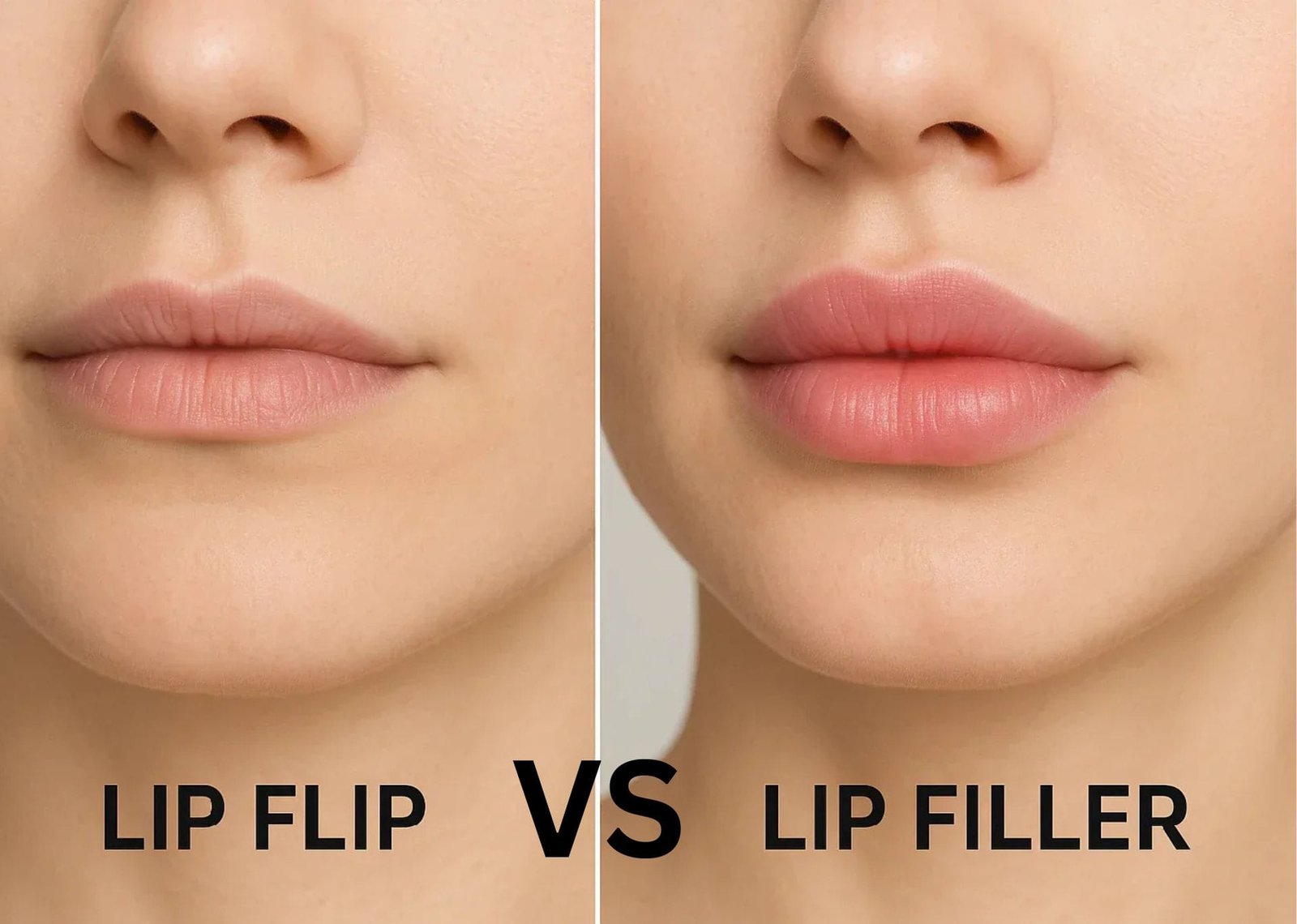
If you want a more defined or balanced upper lip, you have probably come across two popular options: the lip flip and lip filler. They are often mentioned in the same breath, and some people assume they are two names for the same thing. They are not. Each works through a different mechanism, produces a different look, and suits a different set of goals.
This guide explains how the two treatments differ and how to decide which one fits your face and your preferences. It is written to help you prepare for a consultation, not to replace one. If you are searching for lip enhancement options near you in Westchester County, a clear understanding of the differences will help you ask better questions and avoid choosing a treatment that does not match what you actually want.
What a Lip Flip Does
A lip flip uses a small amount of a neuromodulator, commonly known by the brand name Botox, placed in the muscle around the upper lip. By relaxing part of that muscle, the treatment allows the upper lip to roll slightly outward and upward. The effect is a subtle change in position, which can make the upper lip appear a little fuller or more visible when you smile.
Importantly, a lip flip does not add volume. The lip is the same size as before, but it sits differently. Because of this, the result is usually modest and natural, and it is especially visible in smiling or in photographs. The effect is temporary and typically lasts a couple of months.
What Lip Filler Does
Lip filler is a gel, most commonly made from hyaluronic acid, that is injected into the lips to add volume, shape, or definition. It can be used to create a fuller overall lip, enhance the border, or balance the proportion between the upper and lower lips. The amount and placement are tailored to the individual.
Because it physically adds material, filler can produce a more noticeable change than a lip flip. Results can range from very subtle to dramatic, depending on how much is used and where it is placed. Filler is also temporary, with most people seeing results that last several months to about a year, depending on the product and the individual.
Start by Defining What Bothers You
The most useful question is not which treatment is better but what you want to change. Different concerns point to different solutions, and being specific helps your provider recommend an approach that suits your goals.
If Your Upper Lip Disappears When You Smile
If your lip seems to roll inward or vanish when you smile, a lip flip may be worth discussing. Because it addresses the way the lip moves rather than its size, it can improve how the lip shows without changing its overall volume. A provider will assess how your lip behaves during expressions.
If You Want More Overall Fullness or Shape
If your main concern is that your lips are thin overall, or you want to improve symmetry, definition, or shape, filler may be more appropriate. It is the option that adds volume and can reshape the lip. A provider can help you decide how much change would look natural on your face.
If You Are Not Sure
Some people are unsure what is bothering them. A thoughtful consultation can help. A provider can look at your lip proportions, your smile, and your facial balance, then explain what they see. Sometimes the best suggestion is a conservative first step, or no treatment at all.
Comparing the Look and Feel
A lip flip typically produces a soft, subtle change, and the lip feels like your natural lip. Because the effect comes from muscle relaxation, you may notice some changes in how the lip moves, such as using a straw or whistling feeling different for a few weeks.
Filler can feel slightly firmer at first, especially in the first days, and swelling is common initially. As the product settles, most people find the lips feel soft and natural. The choice of filler and technique influences how natural the result looks and feels, which is another reason experience matters.
Considering Commitment and Reversibility
Both treatments are temporary, but they differ in how they wear off and whether they can be adjusted. A lip flip fades as the muscle regains activity, and it cannot be reversed in the same way as some fillers, though its effect is short-lived and the dose is small.
Hyaluronic acid fillers can usually be dissolved with an enzyme if you are unhappy with the result, which gives some people peace of mind. Even so, dissolving filler is a medical procedure, and it is best to choose a provider carefully at the start. Ask each provider how they handle adjustments and what policies apply if you are not satisfied.
Risks to Understand for Each Option
Both treatments carry risks. Common effects include swelling, bruising, and tenderness. With a lip flip, there can be temporary changes in lip movement or mild asymmetry. With filler, lumps, uneven contour, and in rare cases serious complications such as impaired blood flow can occur, which is why anatomical knowledge is essential.
These risks are reduced when the treatment is performed by a trained clinician working under proper medical oversight. Tell your provider about your health history, medications, and any past reactions to injectables. If you experience severe pain, skin color changes, or vision changes after any injectable treatment, seek urgent medical attention.
Can You Combine the Two?
Some people choose both treatments, using a lip flip to improve the position of the upper lip and filler to add volume or definition. A provider might suggest starting with one and adding the other later, once you see how your lips respond and decide whether you want further change.
Combining treatments increases cost and complexity, so it should be done thoughtfully. Ask why a combination is recommended and whether starting with a single treatment would be enough. A provider who explains the reasoning and respects a conservative approach is likely to put your preferences ahead of upselling.
Questions to Bring to Your Consultation
Bring photos of lips you like, along with any you dislike, since images help communicate your taste. Ask what each treatment would realistically do for your face, how long results last, what the total cost would be, what the risks are, and how any concerns are handled afterward.
Ask the provider who will perform the treatment and what their experience is. A good provider will explain the pros and cons of each choice and respect your decision, whichever you choose. To learn more about lip flip vs lip filler, you can read Skin Theory Aesthetics’ guide, or book a consultation to discuss your goals in person.
Frequently Asked Questions
What is the main difference between a lip flip and lip filler?
A lip flip relaxes a muscle so the upper lip rolls slightly outward without adding volume, while lip filler is a gel injected to add volume, shape, or definition to the lips.
Which lasts longer, a lip flip or lip filler?
Filler generally lasts longer, often several months to about a year, while a lip flip typically lasts around two to three months. Duration varies by product, dose, and individual.
Can I get a lip flip and filler together?
Yes, some people combine them, using a lip flip for position and filler for volume. A provider can suggest whether to start with one treatment and add the other later.